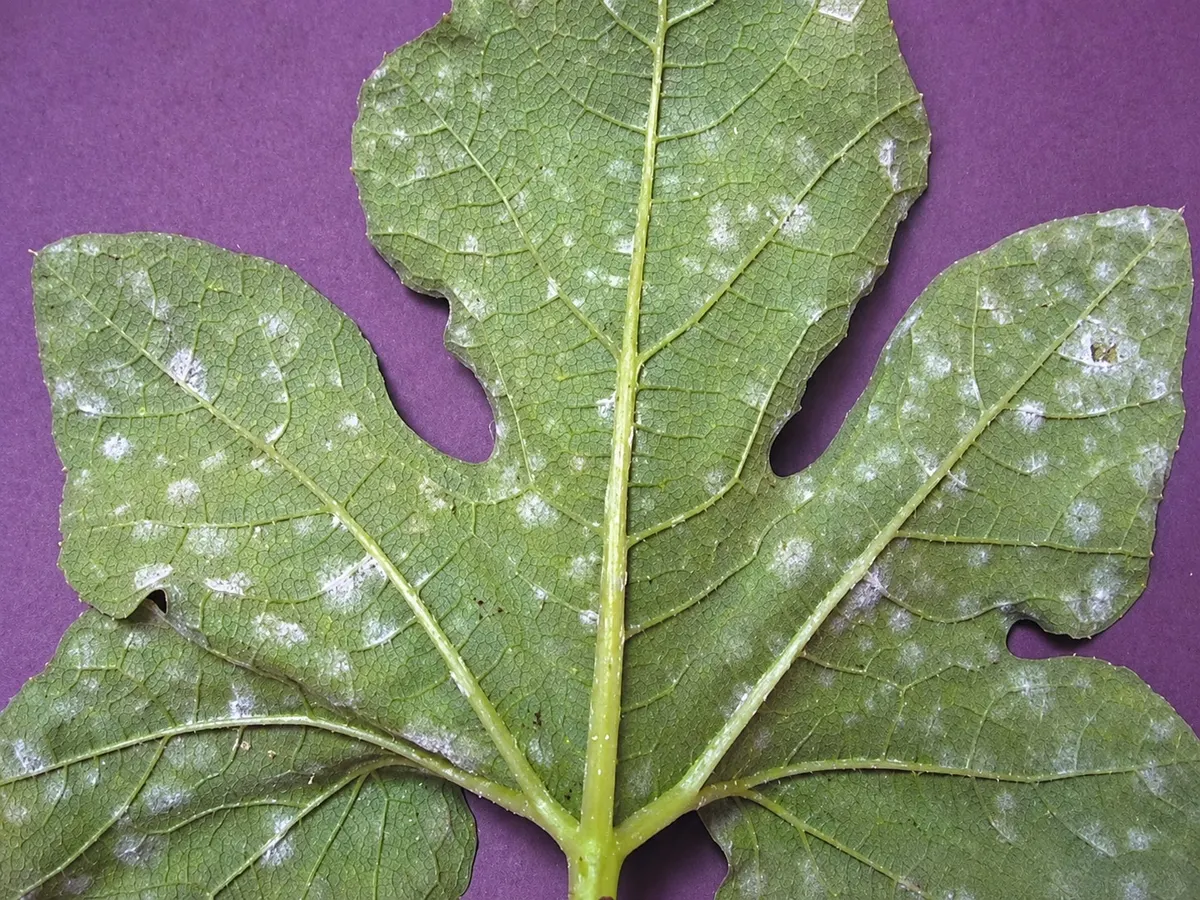
Powdery mildew is one of the easiest cucurbit diseases to recognize once it is well established, but it is easy to misread at the beginning. A few white spots on an older squash leaf can look like dust, spray residue, or the pale natural markings some squash varieties already have. A few yellow angular spots on cucumber leaves can be downy mildew instead, and that is a different problem with different urgency.
The useful first question is not “what can I spray?” It is “what am I actually seeing?” On squash, zucchini, cucumbers, melons, gourds, and pumpkins, powdery mildew usually starts on older or shaded leaves, then spreads as white to gray powdery patches on leaf surfaces, petioles, and sometimes stems. It often shows up in mid to late summer, just when plants are carrying fruit and the canopy is crowded.
Disclosure: Some product links in this article are affiliate links, which means Plant by ZIP may earn a commission if you buy through them at no extra cost to you.
What the gardener is seeing
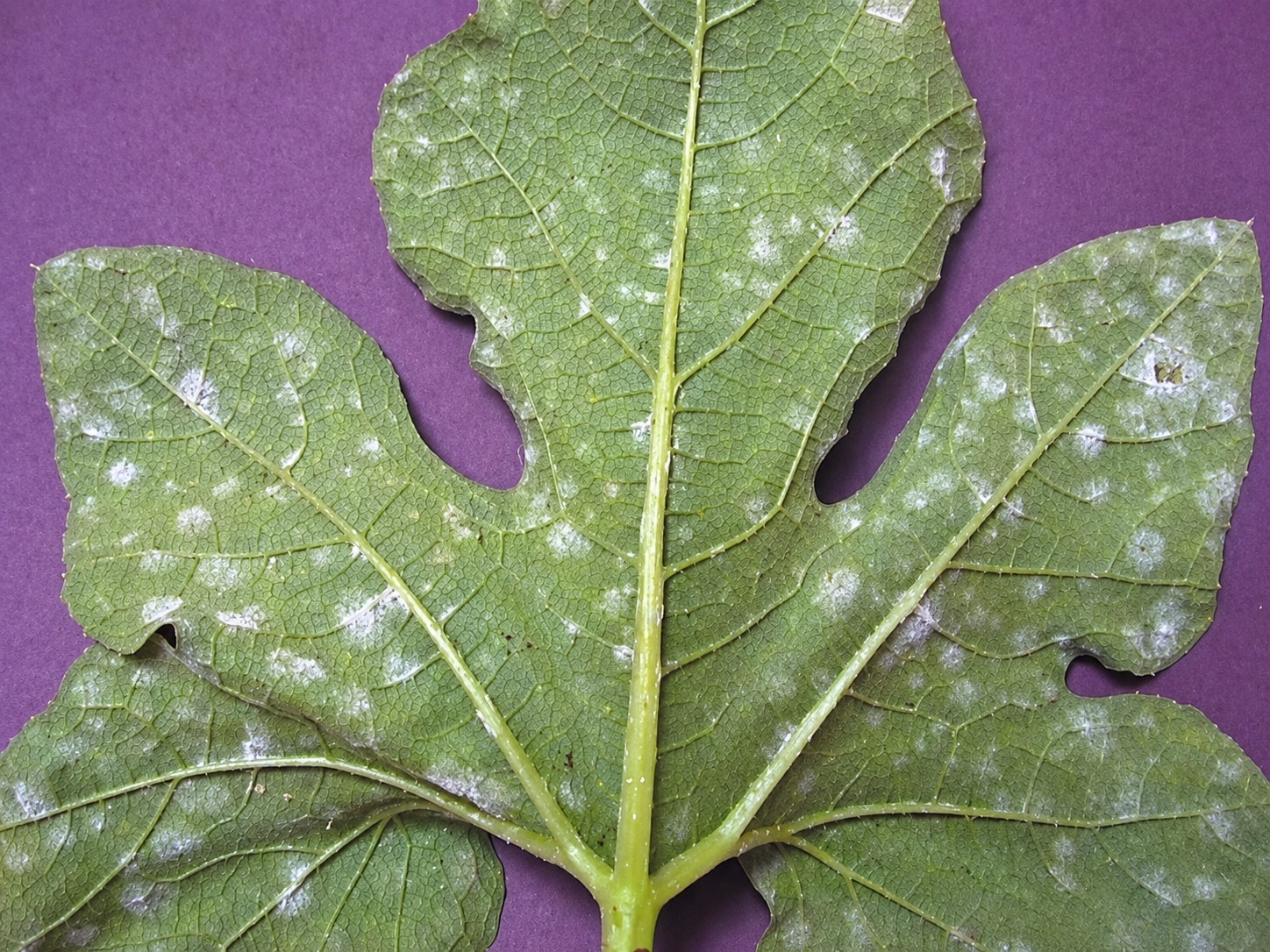
Powdery mildew first appears as pale yellow spots or small white powdery colonies. Check older leaves, lower shaded leaves, and the undersides of leaves first. The white growth can occur on both upper and lower leaf surfaces. As the disease advances, the patches merge until leaves look dusted with flour. Badly infected leaves yellow, brown, dry out, and stop feeding the plant well.
On squash and pumpkins, the mildew may become obvious on broad older leaves before the vine seems weak. On cucumbers and melons, fruit production may slow, fruit may be smaller, and exposed fruit can sunscald after the leaf canopy thins. University of Minnesota Extension notes that powdery mildew can reduce fruit size and number, and that fruit quality can suffer through sunscald, incomplete ripening, poorer flavor, and poorer storage.
Do not confuse powdery mildew with normal leaf color. Many zucchini, winter squash, and pumpkin varieties have silvery or pale markings along veins. Those markings are usually built into the leaf tissue, follow a fairly regular pattern, and do not rub off. Powdery mildew looks more like a surface growth. If you rub a spot gently with a damp finger, true mildew may smear; natural variegation will not.
What usually causes it
Cucurbit powdery mildew is usually caused by closely related fungi in the Podosphaera and Golovinomyces groups. The exact name matters to pathologists and breeders, but the garden-level behavior is consistent: spores spread by wind, infection often begins on older or shaded foliage, and a dense canopy with poor airflow helps the disease build.
Powdery mildew is a little different from many leaf diseases. It is favored by humidity, but it does not need free water sitting on the leaf surface the way many fungal and water-mold diseases do. University of Maryland Extension points out that powdery mildew can be destructive in dry as well as hot seasons and is not encouraged by wet foliage the way many other pathogens are. Utah State Extension describes rapid spread under warm, dry weather with high evening humidity, especially in crowded plantings.
The main risk factors are practical ones:
Crowded vines with poor air movement.
Shaded beds, especially where tall crops, fences, or weeds keep leaves damp and still overnight.
Older leaves that are already stressed by fruit load, heat, drought, or low fertility.
Susceptible varieties, especially older squash, pumpkin, and melon varieties without powdery mildew resistance.
Overdone nitrogen fertilizer, which can push lush growth and a dense canopy without improving disease resistance.
Powdery mildew can move fast. Cornell’s Long Island Vegetable Health program notes that symptoms can show within a few days under favorable conditions. That is why a clean plant one weekend can look dusty by the next.
What to do first
Start with a diagnosis check before you prune or spray.
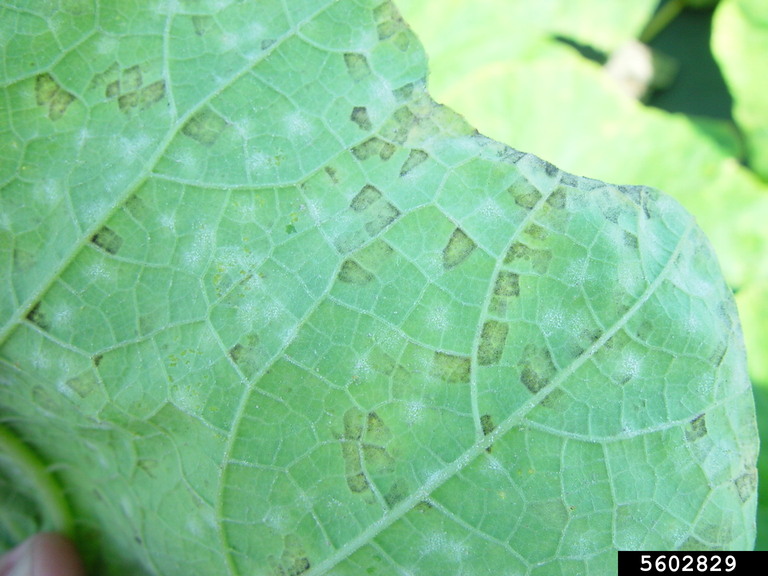
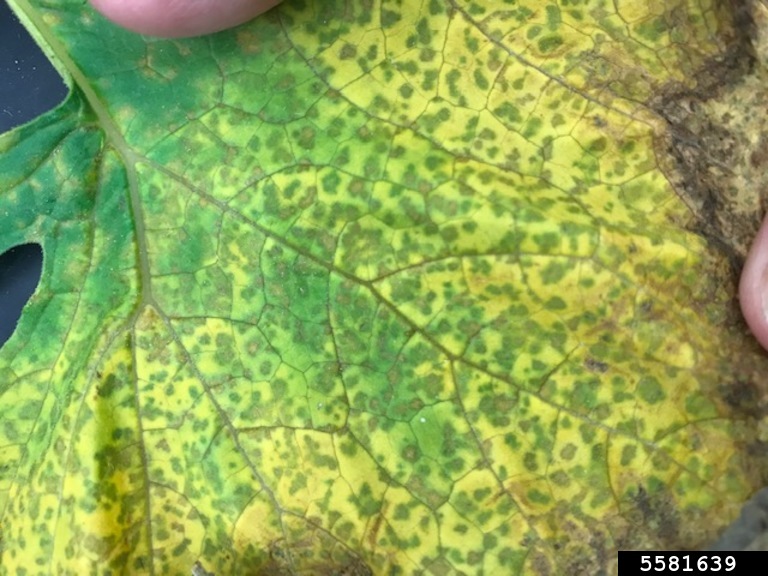
Look at the pattern. Powdery mildew is white to gray and powdery. It may be on upper leaf surfaces, lower leaf surfaces, petioles, and stems. It often starts on older leaves. Downy mildew is more likely to make yellow or pale green angular spots on the upper leaf surface, with gray to purplish fuzz on the underside during humid conditions.
Check the underside of leaves in the morning. Downy mildew sporulation is easier to see when humidity is high. If leaves have angular yellow patches bounded by veins, especially on cucumbers or melons, compare them with current extension alerts and the Cucurbit Downy Mildew ipmPIPE map. Downy mildew is more destructive on cucumbers and melons and often needs faster action.
Check whether the white marking rubs off. Do this gently on one leaf. A smear supports powdery mildew. Pale leaf variegation that is part of the leaf will stay in place.
Decide how much crop is left. A squash plant with three old mildewed leaves and several weeks of harvest ahead is worth managing. A cucumber planting that is already declining after a long harvest may not be worth a rescue program. The right decision changes with timing.
Step-by-step fix
Remove the worst leaves, but do not strip the plant bare. Cut off leaves that are heavily covered, yellowing, or lying on the soil. Leave enough healthy foliage to shade fruit and feed the plant. Severe leaf removal can cause sunscald on squash, pumpkins, melons, and cucumbers. Use clean bypass pruners and take infected leaves out of the bed.
Open the canopy. Train cucumbers and small-fruited squash upward where practical. A trellis or trellis netting can improve airflow, keep leaves easier to inspect, and make harvest less damaging. Use soft plant ties or clips so stems are supported without being cinched.
Water the root zone. Drip irrigation will not prevent powdery mildew by itself, because powdery mildew is not mainly a splash disease. It still helps the planting by reducing leaf wetness that favors other diseases, keeping vines from drought stress, and making watering more consistent. A drip irrigation kit is useful for repeated beds; the Plant by ZIP drip irrigation guide explains filters, pressure regulation, emitters, and timers.
Stop feeding heavy nitrogen. If the plants are dark green, vigorous, and crowded, more fertilizer is not the fix. If plants are pale and weak for reasons other than mildew, use soil-test guidance or a modest vegetable fertilizer, not a big nitrogen push.
Protect new growth. Fungicides and organic products work best early, before the disease covers most of the plant. University of Minnesota Extension recommends starting fungicide treatments when powdery mildew is first found in susceptible plantings where the disease has caused yield loss before. University of Maryland Extension notes that horticultural oil products are labeled for powdery mildew control on cucurbits. Utah State Extension lists sulfur, potassium bicarbonate, oils, and conventional fungicides as options, with important cautions about plant injury.
Read the label before using any spray. The crop must be listed. Powdery mildew must be listed. Follow the rate, reapplication interval, preharvest interval, and temperature limits. Oils can injure plants when applied during hot weather. Sulfur can injure plants in warm conditions and should not be mixed with oils or applied close to oil sprays. If the label says not to spray above a certain temperature, believe it.
What to buy, if anything
For a home garden, the highest-value purchases are usually tools that improve airflow and watering discipline, not a cabinet full of rescue sprays.
Buy or use support where it makes sense. Cucumbers, small melons, and some compact squash are easier to scout on a trellis. Large winter squash and pumpkins may not be practical to trellis, but wider spacing and weed control still help.
Use drip irrigation if overhead watering is making the whole cucurbit patch wet every evening. Again, drip is not a powdery mildew cure. It is a way to reduce stress and avoid stacking other leaf diseases on top of powdery mildew.
Keep pruners sharp and clean enough to remove badly diseased leaves without tearing stems. You do not need to sterilize after every single powdery mildew cut in a lightly infected patch, but avoid carrying wet, diseased debris through the garden and then handling healthy plants roughly.
Consider a labeled powdery mildew product only when the crop still has real production ahead. For a few mildew spots on productive plants, a labeled horticultural oil, potassium bicarbonate, sulfur, or other home-garden fungicide may slow spread if used correctly. For a plant that is already mostly white and collapsing, buying a spray is usually late money.
Skip home remedies that do not have label directions for edible crops. Milk sprays, baking soda mixes, dish soap blends, and kitchen oils get passed around because they sound harmless. They can injure leaves, leave residues, or give inconsistent control. Extension guidance is steadier: resistant varieties, airflow, spacing, cleanup, and labeled products used early.
When to call extension or escalate
Call your county extension office or use a plant diagnostic lab if the symptoms do not fit cleanly. Escalate especially when cucumber or melon leaves show angular yellow spots that turn brown quickly, when the underside has gray-purple fuzz, or when a regional downy mildew alert is active. Downy mildew and powdery mildew sound similar, but they are different organisms and many products that help one will not help the other.
Also ask for help if the planting collapses rapidly while the soil is moist. Sudden wilting in cucumbers and melons can involve cucumber beetles and bacterial wilt. Wilting zucchini can involve squash vine borer. White powder on leaves may be part of the scene without being the main cause of collapse.
For source guidance, see University of Minnesota Extension on powdery mildew of cucurbits and downy mildew of cucurbits, University of Maryland Extension on powdery mildew on vegetables and managing downy mildew of cucurbits, Utah State Extension on powdery mildew on vegetables, Cornell’s Long Island Vegetable Health page on cucurbit powdery mildew, and the Pacific Northwest Pest Management Handbooks entry on squash powdery mildew. Hero image: David B. Langston, University of Georgia, Bugwood.org, CC BY 3.0.
Bottom line
Powdery mildew is common, visible, and manageable when you catch it early. Confirm that the white growth is really mildew, remove the worst leaves without exposing fruit, improve airflow, keep roots evenly watered, and use only labeled products while the crop still has time to benefit. For next season, choose resistant varieties, give cucurbits room, plan support before vines run, and use the Plant by ZIP planting calendar and ZIP-based plant matching tool to keep timing and crop placement deliberate.