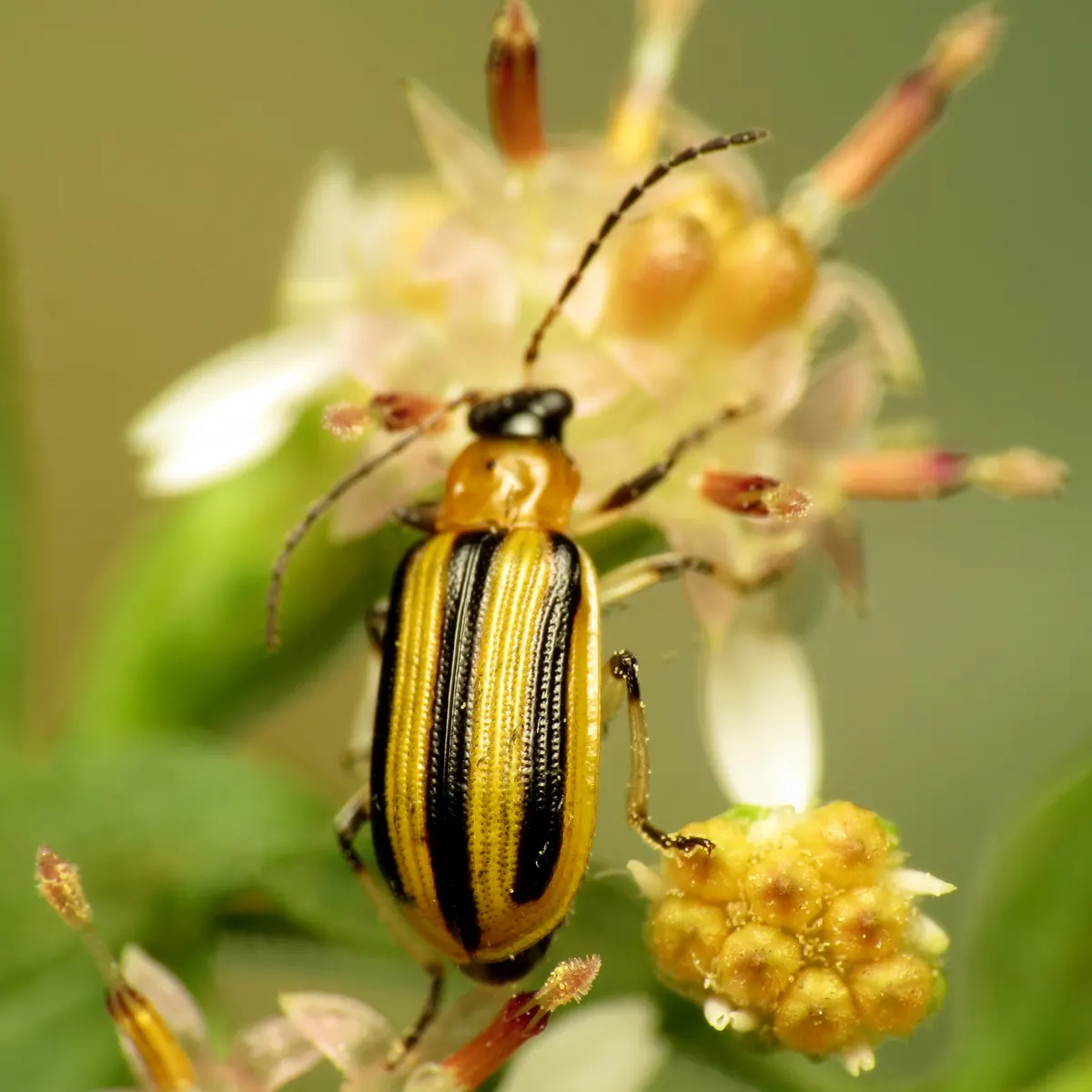
Cucumber beetles are easy to underestimate because they are small. A few yellow beetles chewing cucumber leaves may not look like a crisis. The real risk is not just the holes in the leaves. Striped cucumber beetles, and in some regions spotted cucumber beetles, can move the bacterium that causes cucurbit bacterial wilt. Once that disease is inside a susceptible cucumber or melon plant, there is no rescue treatment that makes the plant recover.
That changes the job. You are not trying to win a late-season battle against every beetle in the garden. You are trying to protect young cucurbits during the vulnerable window, recognize bacterial wilt early, and avoid wasting time spraying plants that are already infected.
Disclosure: Some product links in this article are affiliate links, which means Plant by ZIP may earn a commission if you buy through them at no extra cost to you.
What the gardener is seeing
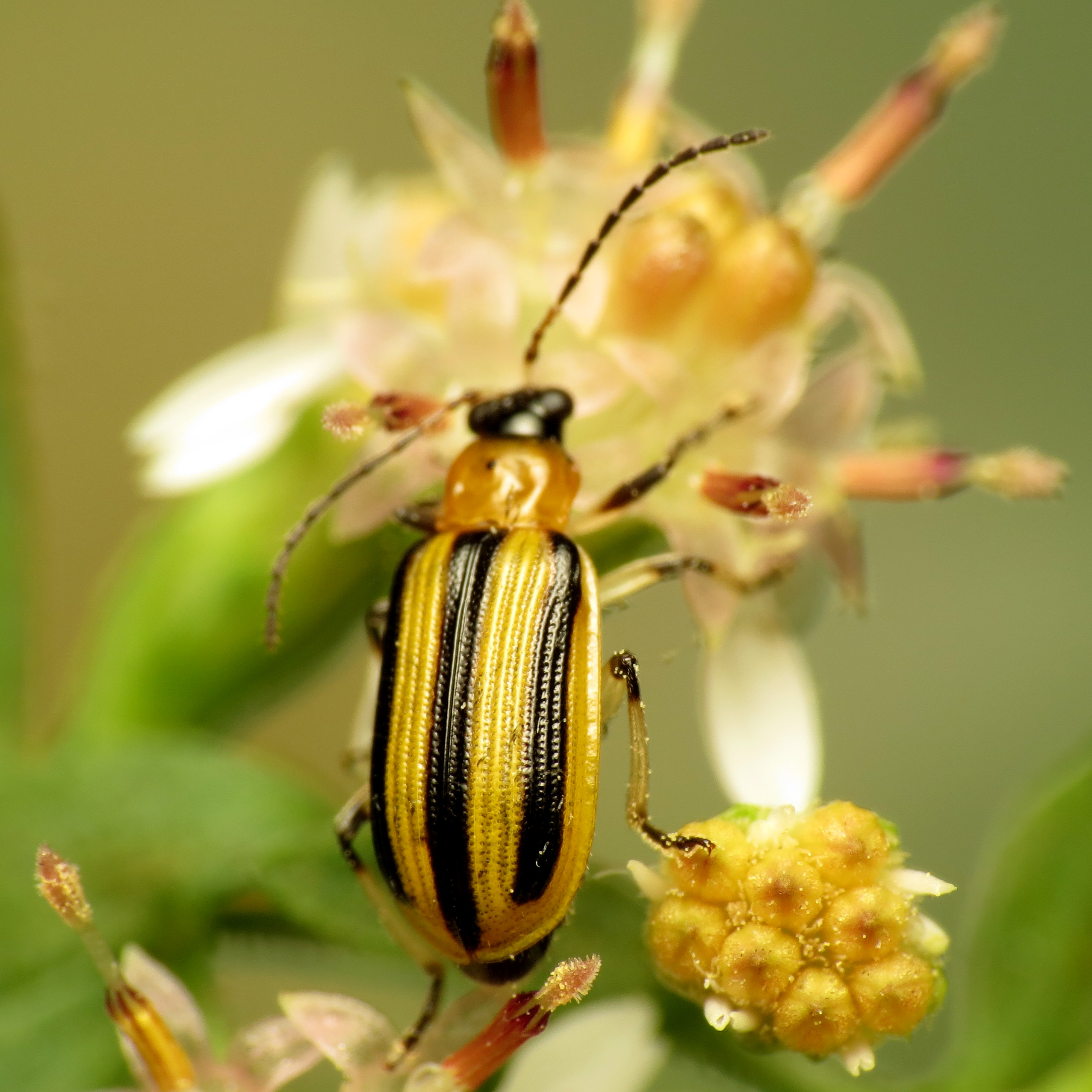
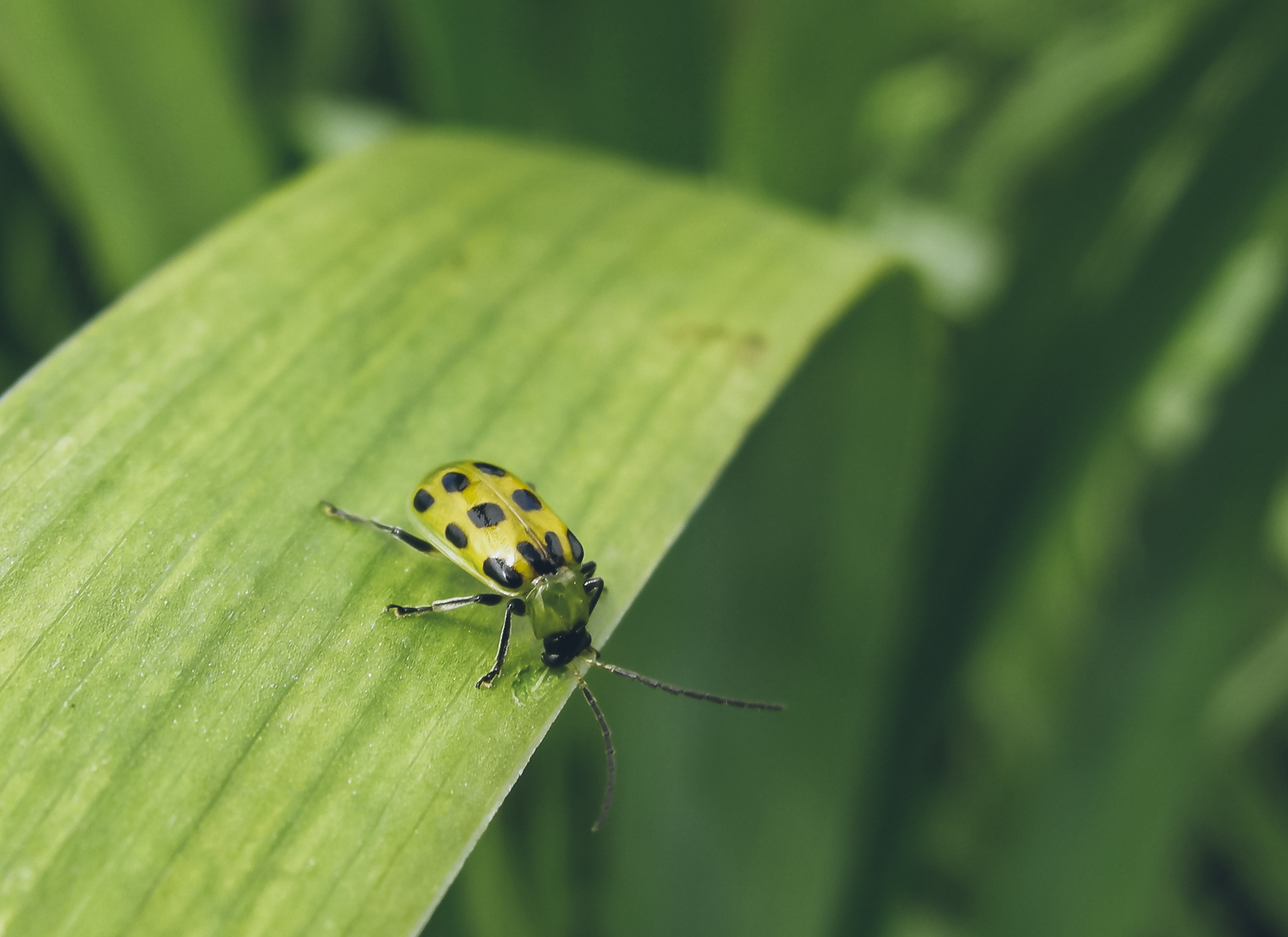
The first clue may be beetles: small, active, yellow-green insects on cucumber, muskmelon, squash, pumpkin, or gourd plants. Striped cucumber beetles have three dark lengthwise stripes. Spotted cucumber beetles have 12 dark spots and are also called southern corn rootworm in the larval stage. Both adults are roughly one-quarter inch long.
Feeding damage usually shows as ragged holes in young leaves, chewed cotyledons, damaged flowers, scarred fruit, or beetles clustered inside blossoms. On seedlings, enough feeding can stunt or kill plants directly. On larger plants, moderate leaf feeding may be tolerable, but the disease risk still matters on cucumbers and melons.
The more serious symptom is wilt. A leaf, runner, or whole plant may wilt even when the soil is moist. Early bacterial wilt often looks like heat stress: leaves droop during the day and may recover overnight. As the infection moves through the water-conducting tissue, wilting progresses down the vine and the plant eventually collapses.
Do not diagnose bacterial wilt from wilting alone. Drought, root injury, squash vine borer, squash bugs, stem rot, and transplant stress can also cause wilt. The pattern that should raise suspicion is moist soil plus cucumber beetles plus progressive wilt on cucumber, muskmelon, or cantaloupe.
What usually causes it
Cucumber beetles feed on cucurbit leaves, stems, flowers, and fruit. The striped cucumber beetle is often the more important early-season pest in northern and central gardens because it can overwinter as an adult and move into young cucurbit plantings soon after emergence. Spotted cucumber beetles may arrive later in some northern regions, while warmer regions can see longer beetle activity and more generations.
Bacterial wilt is caused by Erwinia tracheiphila. University extension sources describe the disease as most severe on cucumbers and muskmelons, with squash and pumpkins generally less affected and watermelon usually not affected. The bacterium is moved by cucumber beetles as they feed. Beetles wound the leaf or stem, and contaminated frass can enter feeding wounds with moisture from dew or rain. Inside the plant, bacteria multiply in the xylem and block water movement.
That is why timing matters. If a cucumber plant is already wilting from bacterial wilt, killing beetles on that plant will not clear the infection. Beetle control is mainly preventive: keep beetles off young plants, scout before damage is heavy, and remove infected plants before they become part of the local disease-and-beetle cycle.
What to do first
Check the soil before blaming disease. Push a finger or trowel several inches into the root zone. If the soil is dry below the surface, water stress may be the main problem. If the root zone is moist and the plant is wilting anyway, inspect the plant and nearby cucurbits.
Look for beetles in three places: under leaves, at the stem base, and inside flowers. Cucumber beetles move quickly and may drop or hide when disturbed. A 10x hand lens or loupe is useful when you are trying to confirm small beetles, feeding wounds, eggs, or look-alike insects without guessing.
Then check the wilt pattern. If one runner is wilting while the rest of the plant still looks normal, mark that plant and inspect daily. If wilt spreads down the vine or the whole plant wilts while neighboring plants remain healthy, bacterial wilt becomes more likely.
You can try the stem-string test, but treat it as a clue rather than a perfect home diagnosis. Cut a freshly wilted stem near the crown, press the cut ends together for a few seconds, then slowly pull them apart. A sticky bacterial thread between the cut surfaces supports a bacterial wilt diagnosis. A negative test does not rule out every problem, and a badly dried stem may not show the result clearly.
Step-by-step fix
If plants are young and beetles are present, act early. On cucumbers and melons, even low beetle numbers deserve attention because those crops are highly susceptible to bacterial wilt. University thresholds vary by crop, growth stage, and region, but the practical home-garden rule is simple: scout young cucurbits two or three times a week, and do not ignore beetles on cotyledons or the first few true leaves.
Hand-remove beetles on small plantings. Visit early in the morning when beetles are slower. Hold a cup of soapy water under the leaf or flower and tap beetles into it. This is not elegant, but for a few cucumber hills it can keep pressure below the level where damage builds quickly.
Use row cover before beetles arrive. Lightweight floating row cover or fine insect netting works best when installed at planting or transplanting, before beetles are already under it. Support the fabric with low tunnel hoops so it does not abrade young leaves, and fasten the edges tightly with soil, boards, landscape staples, or garden clips or cover fasteners. Open edges are beetle doors.
Remove covers at flowering unless you are hand-pollinating. Cucumbers, squash, melons, and pumpkins need pollinators to reach flowers. Male flowers often appear before female flowers, so do not panic the first day you see blooms. Once female flowers are present and need bee visits, covers must come off during pollination hours or be managed for hand pollination.
Do not trap beetles under cover. If you grew cucurbits in the same bed last year, rotate if possible before using row cover. A cover over overwintering beetles or pupae can protect the pest along with the crop. This is one reason Plant by ZIP’s planting calendar and the ZIP-based matching tool on the home page are useful: they help you plan a sequence rather than plant the same vulnerable crop in the same bed by habit.
Mulch after plants are established. Extension guidance notes that thick straw around established plants can make egg-laying near the base less favorable. An organic mulch also reduces soil splash and moisture swings. Keep mulch from packing tightly against the crown, especially in wet weather.
Use trap crops only if you are willing to manage them. Blue Hubbard squash is highly attractive to cucumber beetles and can pull beetles away from cucumbers or melons when planted a week or two earlier. The trap crop must then be treated, vacuumed, removed, or otherwise managed. If you plant a trap crop and ignore it, you have built a beetle nursery.
Remove plants that are clearly infected with bacterial wilt. Once a cucumber or melon plant is steadily wilting from bacterial wilt, there is no cure. Pull it, bag it, and remove it from the garden. Do not leave it as a beetle feeding station. If only one plant in a row is affected, prompt removal may help protect the rest.
Be cautious with insecticides. If local extension guidance and the product label support use on your crop, sprays must reach beetles before infection is established and before populations are overwhelming. Never spray open flowers when bees are active. Read the label for the exact crop, target pest, rate, preharvest interval, and pollinator precautions. The label is the rule, not a suggestion.
What to buy, if anything
For most home gardens, the best purchases are physical barriers and scouting tools, not a shelf of rescue sprays. Start with insect netting or floating row cover, hoops, and clips. Those supplies keep beetles from feeding during the seedling stage, which is when direct feeding damage and bacterial wilt risk are most costly.
A hand lens is useful if you are trying to identify beetles, eggs, mites, aphids, or beneficial insects across the season. Mulch is worth buying if you do not have clean straw, shredded leaves, pine straw, or aged wood chips on hand. If you use a trap crop like Blue Hubbard squash, label it clearly so it does not get confused with the main crop when you are scouting.
Do not buy a product expecting it to cure wilt. There is no spray, fertilizer, or calcium product that reverses bacterial wilt inside a cucumber vine. Spend money on exclusion, monitoring, rotation, and crop choice before you spend it on late rescue treatments.
When to call extension or escalate
Contact your county extension office or a plant diagnostic lab if plants are wilting but you do not find cucumber beetles, if several cucurbit crops are collapsing at once, if you suspect herbicide drift or root disease, or if you need region-specific pesticide thresholds. Bring clear photos of the whole plant, a close-up of the crown, beetles if present, and the stem-string test if you tried it.
Also ask extension for help if cucumber beetles beat you every year despite row cover and rotation. Local timing matters. In some areas the beetle flight is short and early; in others, pressure continues through much of the warm season. A good local answer may involve transplant timing, trap crops, resistant or tolerant varieties, or a very specific treatment window.
For reference, see University of Minnesota Extension on cucumber beetles and bacterial wilt, University of Maryland Extension on striped and spotted cucumber beetles and bacterial wilt transmission, Wisconsin Horticulture on cucumber beetle monitoring and thresholds, Ohio State University Extension on current cucumber beetle management, and Cornell Integrated Pest Management on striped cucumber beetle. The broader Plant by ZIP pest management guide explains the same identify-first approach for other garden pests.
Hero photo: Katja Schulz / Wikimedia Commons, CC BY 2.0.
Bottom line
Cucumber beetles are most important before you see wilt, not after. Protect young cucumbers and melons with sealed row cover or insect netting, scout several times a week, remove beetles early, and uncover at flowering for pollination. If bacterial wilt is confirmed or strongly suspected, pull the infected plant and protect the rest. The good work is prevention, because a wilted cucumber vine usually cannot be talked back into health.