If you’ve ever walked out to your garden in the morning expecting to admire your tomatoes and instead found leaves shredded to lace, fruit with holes punched through it, and entire seedlings sheared off at the soil line, you’ve already met the problem this article is about. The plants may be fine. Something is eating them. And the answer is almost never to grab the most aggressive spray at the hardware store and treat the whole bed.
Pest management is one of the most misunderstood areas of home horticulture. People will spend money on fancy varieties, premium soil amendments, and elaborate trellis systems, then panic at the first chewed leaf and undo all of it with a poorly chosen pesticide that kills more friends than enemies. The truth is that a healthy garden is always going to have some insect damage, and a garden with zero insect damage is usually a garden with zero beneficial insects either, which means one bad week can become a real problem.
Here’s how to think about garden pests honestly, identify the ones that actually matter, and respond in a way that doesn’t make things worse.
Disclosure: Some product links in this article are affiliate links, which means Plant by ZIP may earn a commission if you buy through them at no extra cost to you.
What “pest” actually means for gardeners
A pest is not any insect on your plants. A pest is an organism doing economic damage, meaning damage significant enough to reduce your yield, kill the plant, or ruin the harvest. Most insects in your garden are doing nothing of the sort. They’re pollinating, predating on actual pests, decomposing organic matter, or just passing through. The instinct to kill anything with more than four legs is a common mistake home gardeners make.
The mental model that works is called integrated pest management, or IPM. It’s not a product or a philosophy as much as a sequence of steps. Identify the organism. Confirm it’s actually causing meaningful damage. Try the least disruptive intervention first. Escalate only if needed. And throughout, support the conditions and creatures that suppress pest populations naturally. Done right, IPM means you spray less, spend less, and harvest more.
Skip the identification step and everything downstream falls apart. Gardeners often hit squash beds with broad-spectrum insecticide trying to kill what turns out to be harmless soldier beetles.
The pests that actually matter
Before reaching for any product, be honest about what you’re dealing with. The same chewed leaf can mean five different things, and the right response depends entirely on which thing it is.
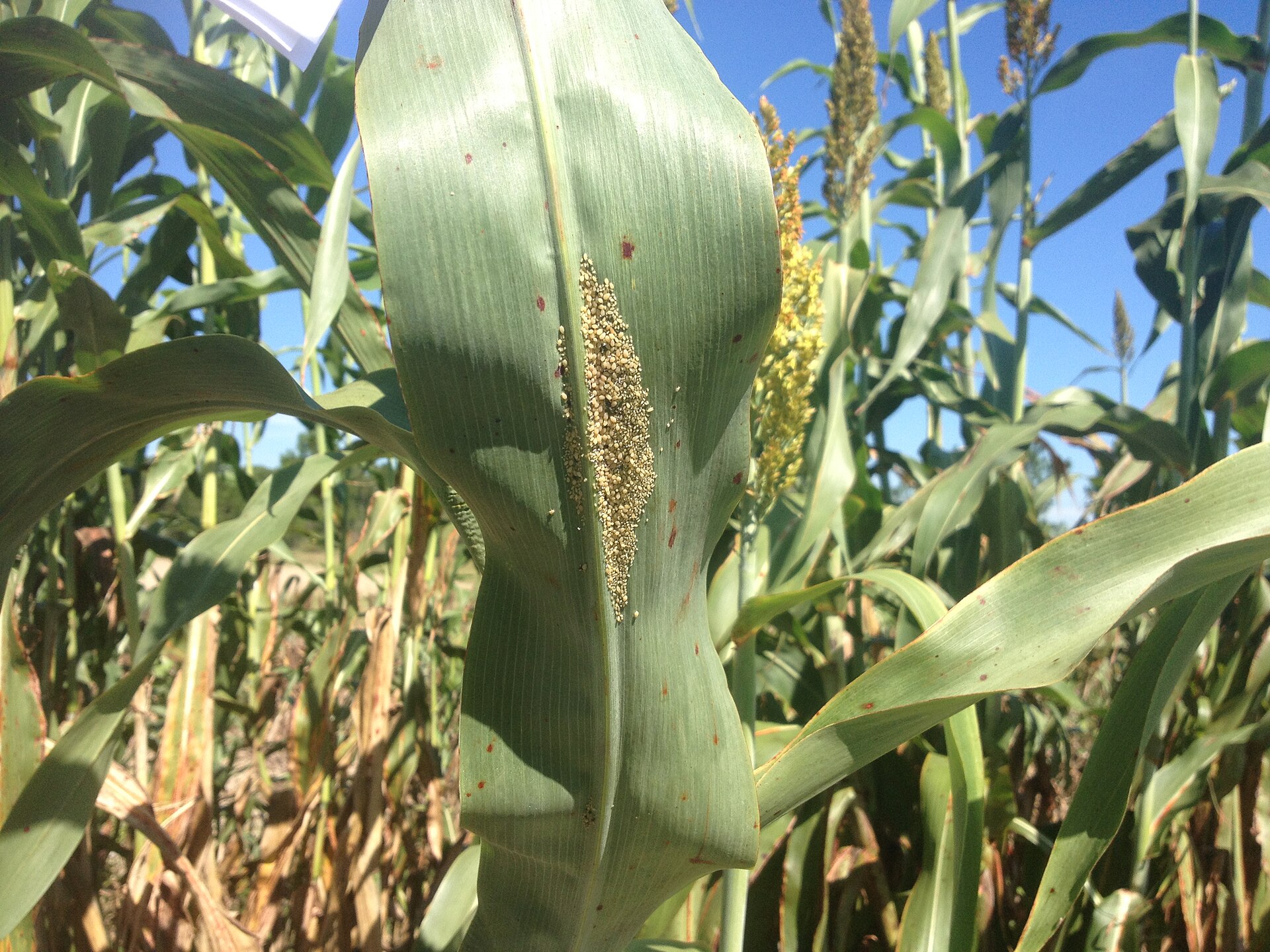
Aphids are tiny, soft-bodied insects that cluster on new growth and the undersides of leaves. They suck plant sap, cause distorted leaves, and excrete sticky honeydew that grows sooty mold. They reproduce so fast it’s genuinely alarming. A small aphid population is normal and self-correcting if you have predators around. A heavy infestation can stunt or kill young plants.
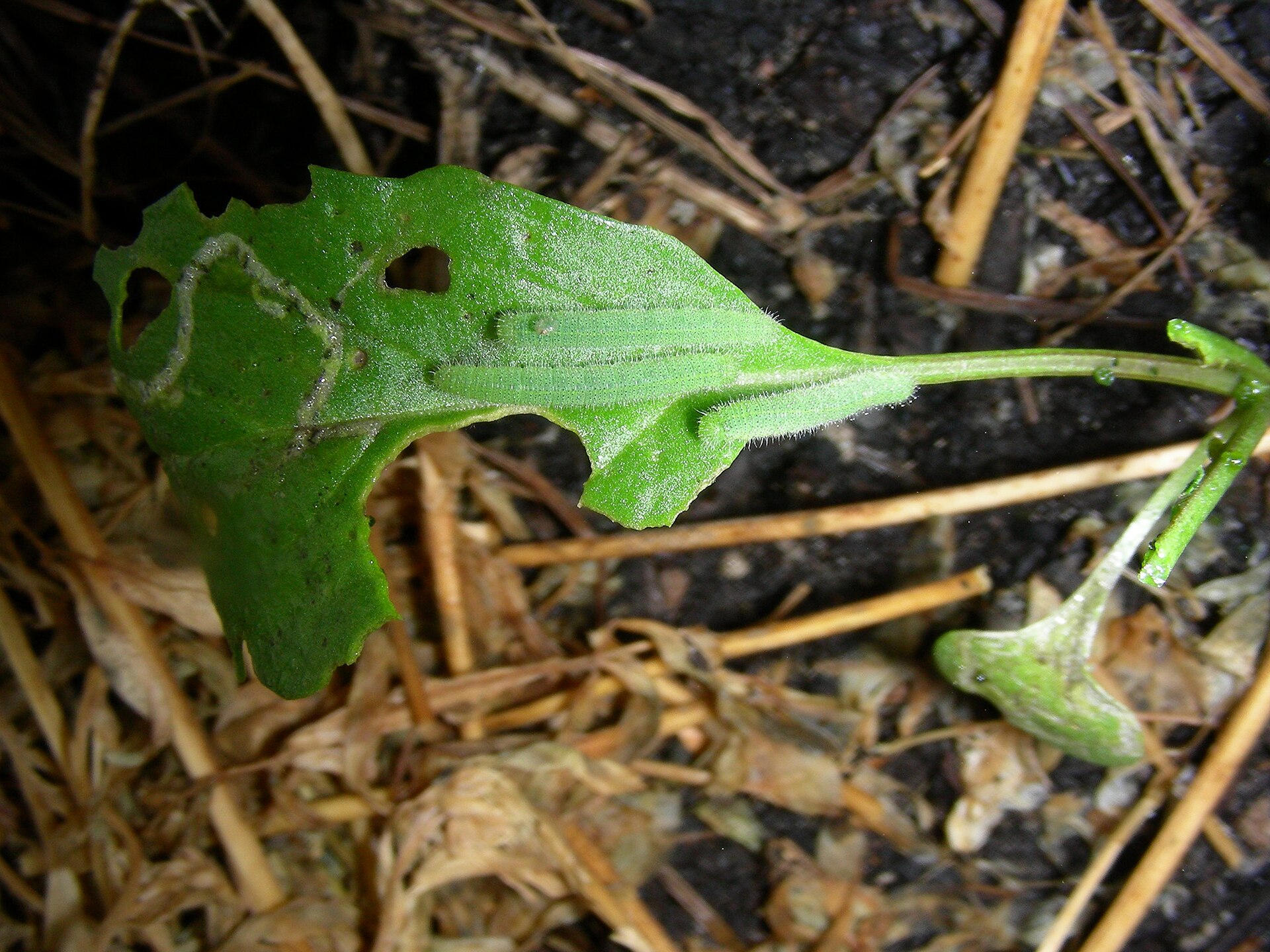
Cabbage worms and loopers are the green caterpillars that turn brassicas, including cabbage, kale, broccoli, and collards, into Swiss cheese. The adults are those white butterflies you see fluttering around the garden in spring and summer. If you grow brassicas without protection, you will deal with these.
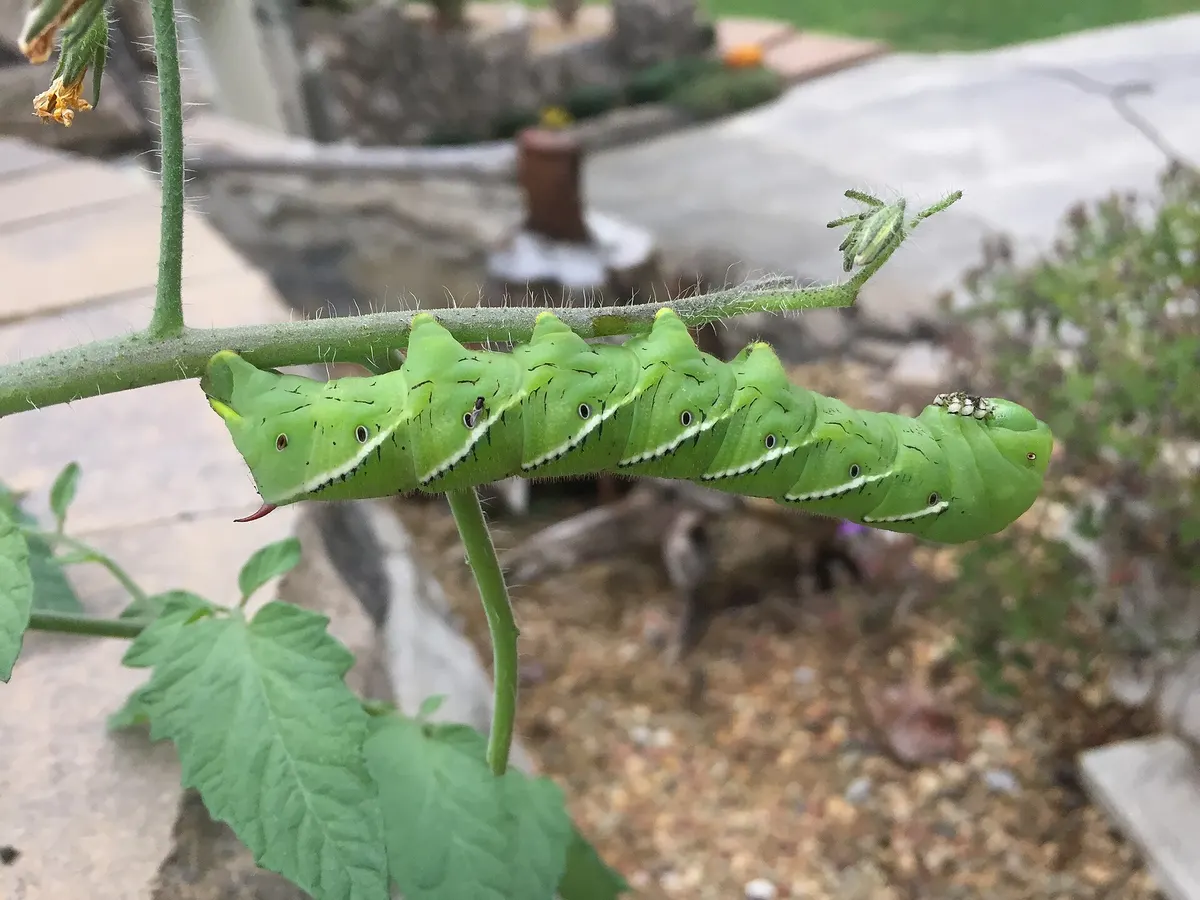
Tomato hornworms are the dramatic ones. Bright green caterpillars the size of your finger can strip a tomato plant overnight. You won’t see them until the damage is obvious, because they’re cryptically colored. Look for dark green-black droppings on lower leaves and trace upward.
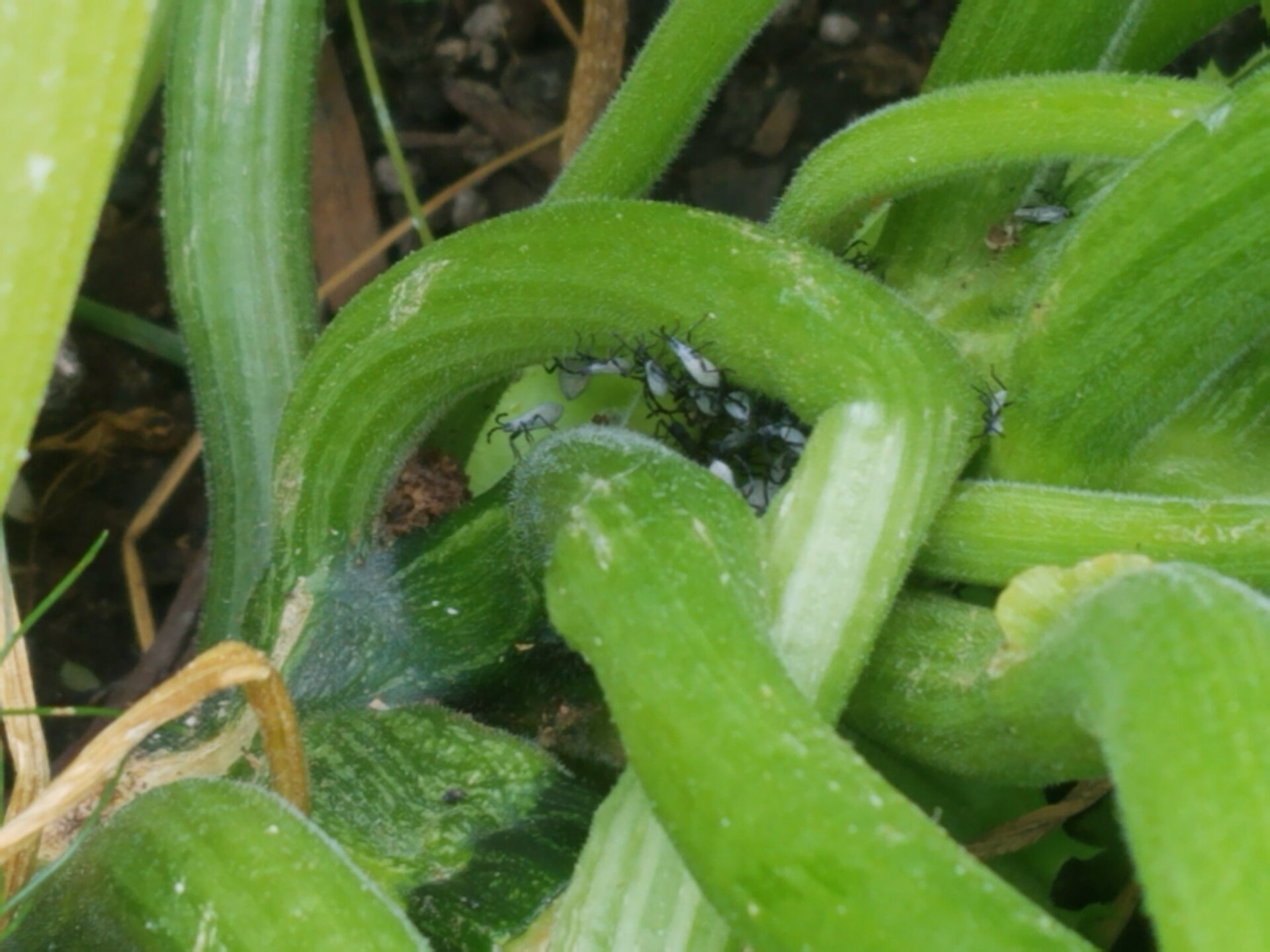
Squash bugs and squash vine borers are the reason your zucchini suddenly wilts and dies in July. Squash bugs are flat, gray-brown shield-shaped insects that cluster at the base of plants. Vine borers are moth larvae that tunnel into stems. Both are heartbreakingly destructive and require early action.
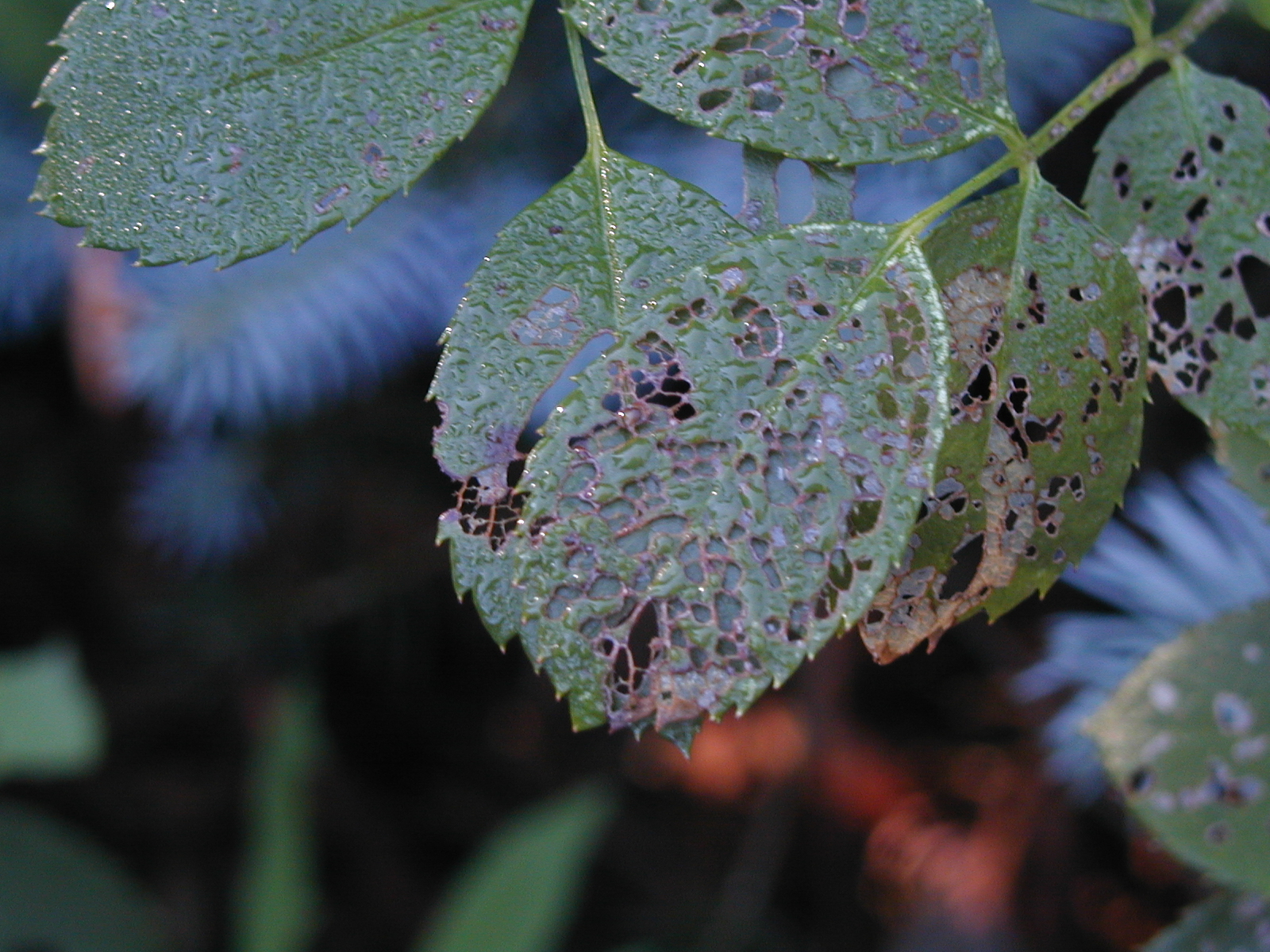
Japanese beetles are the metallic green-and-copper beetles that descend on roses, grapes, fruit trees, and dozens of other plants in summer, skeletonizing leaves in groups. In the South and Mid-Atlantic especially, they’re a serious annual problem.
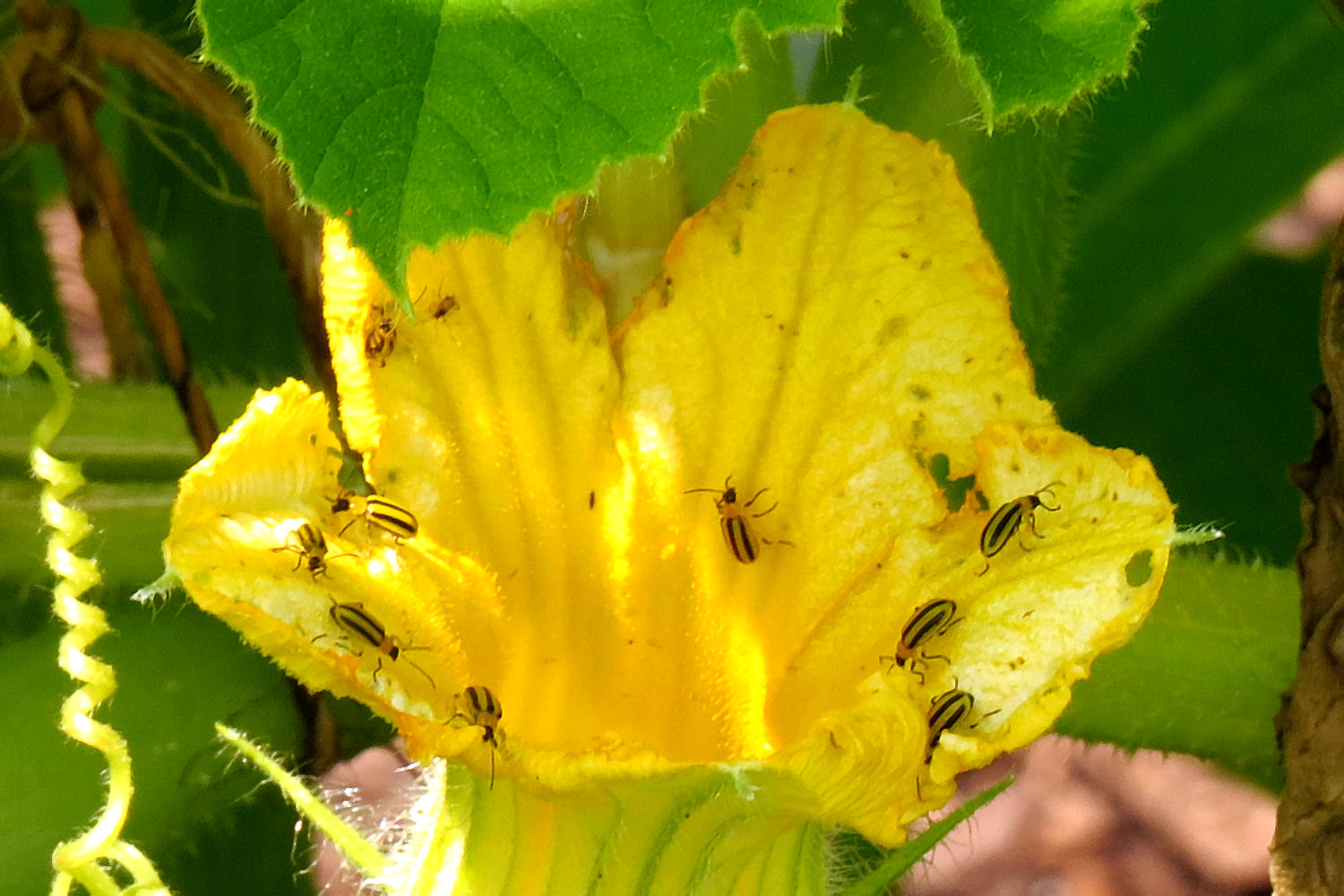
Cucumber beetles are small yellow beetles with black stripes or spots. The damage they do directly is moderate. The bacterial wilt disease they transmit is what actually kills cucurbits.
Flea beetles are tiny jumping beetles that pepper eggplant, potato, and brassica leaves with small round holes. Cosmetic damage on mature plants, but devastating to seedlings.
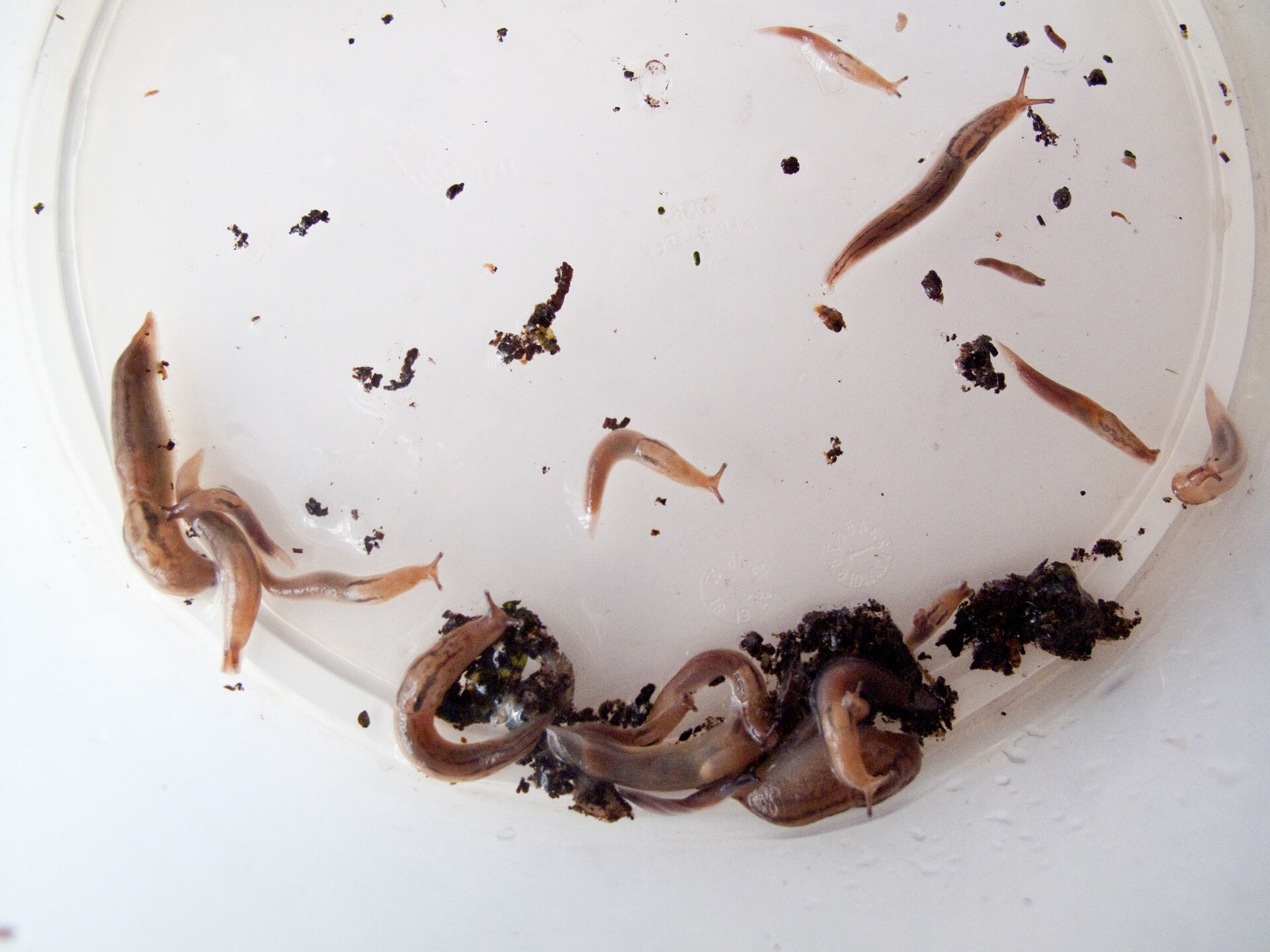
Slugs and snails aren’t insects, but they belong in any honest pest list. They shred hostas, lettuces, and strawberries overnight, especially in damp climates and during wet weather.
Spider mites are not insects either. They’re tiny arachnids that thrive in hot, dry conditions and cause stippled, bronzed leaves with fine webbing underneath. By the time you see the webbing, the infestation is advanced.
Deer, rabbits, voles, and groundhogs are the four-legged pests that can erase a garden faster than any insect. If you live anywhere with deer pressure and you’re not fencing, you’re feeding them.
Everything else, meaning the vast majority of insects you’ll see in your garden, including ladybugs, lacewings, ground beetles, soldier beetles, parasitic wasps, hoverflies, native bees, honey bees, mantises, and most spiders, is either neutral or actively helpful. Killing them is worse than doing nothing.
Identify before you treat
This rule matters. Do not start spraying based on a hunch or based on what your neighbor did. The same damage can come from very different organisms requiring very different responses, and a misdiagnosis costs you both money and time.
You have several reasonable options for identification. The first is your county extension office, which in most states has free or cheap diagnostic services and entomologists who know your region. This is the right move for any pest you can’t confidently identify or any damage that’s significant enough to threaten a crop. The second is one of the better identification apps, which have gotten genuinely good at insect ID from photos in the last few years. The third is a decent reference book on your shelf for when the WiFi is out and the caterpillar is right in front of you.
A 10x hand lens or loupe is the most useful pest-ID tool you can own and costs about ten dollars. Most pest identification problems are scale problems. You can’t tell a beneficial syrphid larva from a pest caterpillar from across the bed, but at 10x magnification they’re obviously different. Spider mites are basically invisible without one.
For caterpillars, aphids, and other small invertebrates, yellow sticky traps double as monitoring tools. Hang one at canopy height in early spring and check weekly. They’ll catch the first wave of aphids, whiteflies, and fungus gnats before you’d see them on plants, giving you a real head start on response. They also catch some beneficials, so use them as monitors, not as your primary control.
For nighttime mystery damage, including severed seedlings, holes in fruit at ground level, and slimy trails, a headlamp and a 9pm garden walk will usually solve the mystery within a week. Cutworms, slugs, earwigs, and various caterpillars do their work after dark, and the only way to confirm what you’re dealing with is to catch them at it.
Take the time to identify before you treat. Spraying broad-spectrum insecticide on a “caterpillar problem” that turns out to be a single hornworm being parasitized by braconid wasps means you just killed the wasps that would have killed the hornworm and prevented the next generation. You’ll recognize that situation by the white, rice-like cocoons on the hornworm’s back. That’s working against your own pest control.
How to respond, in order of preference
Once you’ve confirmed you have a real pest problem causing real damage, there are several real options. They work at different speeds, different scales, and with different collateral damage. Pick based on the pest, the crop, the season, and how much disruption you’re willing to tolerate.
Exclusion, the best prevention tool
If you’re serious about preventing pest damage, physical exclusion is the right tool. It’s not glamorous and it requires a little setup, but it works against a huge range of pests without any chemistry at all.
The general rule is that anything you can keep off the plant in the first place is a problem you don’t have to solve later. Cabbage white butterflies can’t lay eggs on brassicas they can’t reach. Squash vine borers can’t deposit eggs on stems wrapped in row cover. Deer can’t browse what’s behind a fence.
Lightweight floating row cover is one of the most useful organic pest management tools. Lay it over hoops at planting time, secure the edges with rocks or soil, and you’ve eliminated 80 percent of the insect pressure on brassicas, cucurbits until flowering, and most leafy greens. Use the lightest weight available for summer so heat doesn’t build up, and remove it from anything that needs pollination once flowering starts.
For cucurbits specifically, insect netting with smaller mesh keeps cucumber beetles and squash bugs out where row cover sometimes lets them through. The trade-off is slightly less light and airflow, but for the first month after transplanting, when cucurbits are most vulnerable, it’s worth it.
For deer, nothing beats a real fence. Eight feet tall if you can manage it, or two parallel fences four feet apart, because deer won’t jump a span. Short of that, deer netting draped on stakes around individual beds works for moderate pressure. Sprays and repellents work, sort of, but require constant reapplication and stop working when deer get hungry enough.
For rabbits and groundhogs, hardware cloth fencing buried six inches and standing two to three feet tall handles most of it.
Hand removal, slow but free and effective
For larger pests in manageable numbers, picking them off and dropping them in soapy water remains one of the most effective controls ever invented. It’s slow, it’s not fun, but it works perfectly and harms nothing else.
Tomato hornworms, Japanese beetles, squash bugs, Colorado potato beetles, slugs, and cabbage worms all respond well to hand removal. Five minutes a morning with a coffee can of soapy water and a pair of garden gloves can keep populations below damage thresholds on a typical home-scale garden.
For Japanese beetles, morning is the right time, because they’re sluggish from cool overnight temperatures and drop into your can rather than flying off. Skip the pheromone traps, which attract more beetles than they catch and just concentrate the problem in your yard.
For slugs, beer traps, meaning shallow dishes of cheap beer sunk to soil level, work as advertised. So does going out at night with the headlamp.
Biological controls and the food web
The least disruptive pest control is letting other organisms do the work. A garden with a healthy population of predatory insects, birds, frogs, and toads will suppress pest outbreaks before you ever notice them, as long as you don’t routinely poison the predators.
Some of this happens automatically when you stop spraying broad-spectrum insecticides. Some of it you can encourage by planting flowering plants that feed adult beneficial insects: dill, fennel, yarrow, alyssum, sweet alyssum, native asters. Leaving some areas slightly wild and providing water sources helps too.
You can also buy beneficials. Live ladybugs released into an aphid-infested bed can knock back populations quickly, though many will fly off if you don’t release them properly: in the evening, after watering, ideally under a temporary mesh cover for a day. Lacewing larvae, available by mail, are even more effective per insect because they can’t fly away.
For soilborne pests like grubs, fungus gnat larvae, and cutworms, beneficial nematodes are remarkable. They’re microscopic parasitic worms that hunt down and infect specific pest species without harming plants, pets, or people. Apply them in the evening to moist soil and water in.
Bacillus thuringiensis, specifically the kurstaki strain, is a naturally occurring soil bacterium that targets caterpillars and only caterpillars. Spray it on brassica leaves and cabbage worms die within a day or two, but pollinators, beneficials, and you are completely unaffected. It’s especially useful for caterpillar pressure on brassicas. The israelensis strain targets mosquito and fungus gnat larvae with the same specificity.
Bt does have to be reapplied after rain and degrades in sunlight, so it’s not “spray once and forget.” But for caterpillar pressure on brassicas especially, it’s the right tool.
Targeted sprays, when other approaches aren’t enough
If exclusion, hand removal, and biologicals aren’t holding the line, there are targeted spray options that are far less disruptive than broad-spectrum insecticides.
Insecticidal soap is potassium fatty acid soap that breaks down the cuticle of soft-bodied insects like aphids, whiteflies, spider mites, and young scale insects. It only works on direct contact, has no residual activity, is safe for pollinators once dry, and is gentle enough to use on most plants. Spray in early morning or evening, get good coverage on leaf undersides where pests cluster, and reapply every five to seven days as needed.
Neem oil is a botanical extract from the neem tree that disrupts insect feeding and reproduction. It’s broader-spectrum than insecticidal soap and does some harm to beneficials, so use it more selectively. It’s effective against a wider range of pests including some beetles, leafhoppers, and mites. Don’t spray it during the day on flowering plants, both because of pollinator exposure and because oil plus sun can burn leaves.
Spinosad is a fermentation product from a soil bacterium, effective on caterpillars, thrips, leafminers, and some beetles. It’s certified for organic production but is genuinely toxic to bees while wet, so evening application after pollinator activity has stopped is mandatory. It’s a powerful tool used appropriately, a serious mistake used carelessly.
For Japanese beetles, slugs, and other pests where contact sprays are awkward, iron phosphate slug bait, for slugs specifically, is far safer than older metaldehyde products and works just as well. Sprinkle around vulnerable plants in the evening.
Cultural practices, the long game that’s always worth playing
The best pest management isn’t a product. It’s how you garden. Rotating crops so pests can’t build up in the soil from year to year. Cleaning up plant debris in fall so overwintering eggs and larvae don’t have shelter. Choosing resistant varieties. Spacing plants for airflow so problems don’t compound in stagnant pockets. Watering at the base of plants in the morning so leaves dry quickly, denying fungal diseases and slugs the moisture they need.
For anyone establishing a long-term vegetable garden, plan on a multi-year approach to pest pressure. The first couple years tend to be the worst as your soil biology, beneficial insect populations, and predator-prey balance establish. By year three or four, a well-managed garden has dramatically less pest pressure than a new one, often without any intervention at all.
What to avoid
A few things people try that you should skip.
Broad-spectrum synthetic insecticides. Pyrethroids such as bifenthrin, permethrin, and cypermethrin, and neonicotinoids such as imidacloprid, kill everything in their path, including the beneficial insects that would have kept your pest problem in check. The pest population rebounds in days or weeks. The beneficials take months to a year to rebuild. Net result: more pest pressure, not less, and you spent money to make it worse.
Pheromone traps for Japanese beetles. Brilliantly effective at attracting Japanese beetles. Terrible at killing enough of them to matter. They pull beetles from neighboring properties to yours, and most don’t make it into the trap before stopping to eat your plants. Skip them.
“Bug zappers.” Kill almost no mosquitoes and tons of beneficial moths and night-flying pollinators. They’re a net negative for any garden. The blue light is satisfying, but it’s actively harming your beds.
Dish soap in water as homemade insecticidal soap. Real insecticidal soap is potassium fatty acid soap. Dawn and similar dish detergents contain different surfactants and additives that can damage leaf cuticles on many plants. The few dollars saved isn’t worth the leaf burn.
Diatomaceous earth as a primary control. It works on soft-bodied insects in dry conditions. It doesn’t work when wet, which means it doesn’t work after dew or watering, which means most of the time it’s not working. Useful in narrow situations, oversold as a general solution.
Overreacting. A small aphid colony on a few leaves is not a crisis. A few flea beetle holes on mature eggplant is cosmetic. Some caterpillar damage on brassicas is normal. The goal is below threshold, not zero. A garden with zero damage is a garden with zero ecological function, and it’s harder to maintain than one with a healthy balance.
A realistic timeline
If you’re starting a new vegetable garden in a typical suburban yard with normal pest pressure, here’s what a sensible first few years looks like.
Year one. Expect to deal with everything. Aphids on the brassicas, cucumber beetles on the squash, hornworms on the tomatoes, flea beetles on the eggplant. Identify each pest as it shows up. Use row cover aggressively on susceptible crops from planting. Hand-pick what you can. Spot-spray with insecticidal soap or Bt where needed. Don’t expect a beneficial insect population to ride to your rescue yet, because you don’t have one established.
Year two. Plant flowering insectary plants such as alyssum, dill, fennel, calendula, and yarrow throughout the garden. Continue row cover on brassicas and young cucurbits. Hand removal and targeted sprays as needed. You’ll start to see ladybugs, lacewings, and parasitic wasps showing up on their own. Pest pressure should be noticeably lower than year one.
Year three onward. The garden is largely managing itself for many pests. You’ll still need row cover for cabbage white butterflies and squash vine borers, because those don’t have effective predators in most gardens. You’ll still hand-pick hornworms when you find them. But aphid outbreaks resolve themselves in days. Spider mites stay below threshold. The garden has a functioning food web.
This is the patient, durable approach. The shortcut approaches, things like spraying broad-spectrum insecticides on a schedule, work in the short term but leave you on a treadmill where every season requires more spraying than the last. The IPM approach trades a difficult first year for a much easier fifth year.
When to give up and grow something else
One honest piece of advice. Some pest-crop combinations are just genuinely hard in some regions, and after a couple seasons of fighting it, the right answer is sometimes to grow something else.
If you’re in the Mid-South and squash vine borers murder every zucchini you plant by mid-July, consider growing winter squash with solid stems, like butternut or tromboncino, that vine borers can’t penetrate, instead of the summer squashes they prefer. If your brassicas are devastated by harlequin bugs every fall, grow them only in spring. If deer pressure is so heavy that fencing isn’t realistic, focus on plants deer don’t browse, such as most herbs, alliums, and peppers, and skip the lettuce.
Sometimes the right answer isn’t fighting the pest. It’s growing what wants to grow in your conditions.
Use plant choice as pest control
Plant selection will not solve every pest problem, but it can lower the fight. If vine borers are awful where you live, compare Waltham Butternut squash and Tromboncino squash before planting another zucchini. For caterpillar-heavy beds, compare brassicas like Lacinato kale against quicker greens in the plant screener. The screener can also narrow the database to pollinator and native-plant goals without relying on separate collection pages.
Bottom line
Garden pests are real and some of them will destroy crops if you ignore them. But the work of managing them isn’t complicated. It’s patient and observational. Identify before you treat. Use exclusion as your first line. Hand-pick what you can. Lean on biologicals like Bt and beneficial nematodes for the rest. Save targeted sprays for the situations that need them, and skip broad-spectrum insecticides almost entirely. Plan in years, not weeks. And when a particular pest-crop combination keeps beating you, consider growing something else.
Do this right for a few years, and you’ll have a garden where the insects are mostly your allies, the pests stay below threshold, and the harvest shows up reliably without endless spraying.
Hero photo: Ljessee123 / Wikimedia Commons.