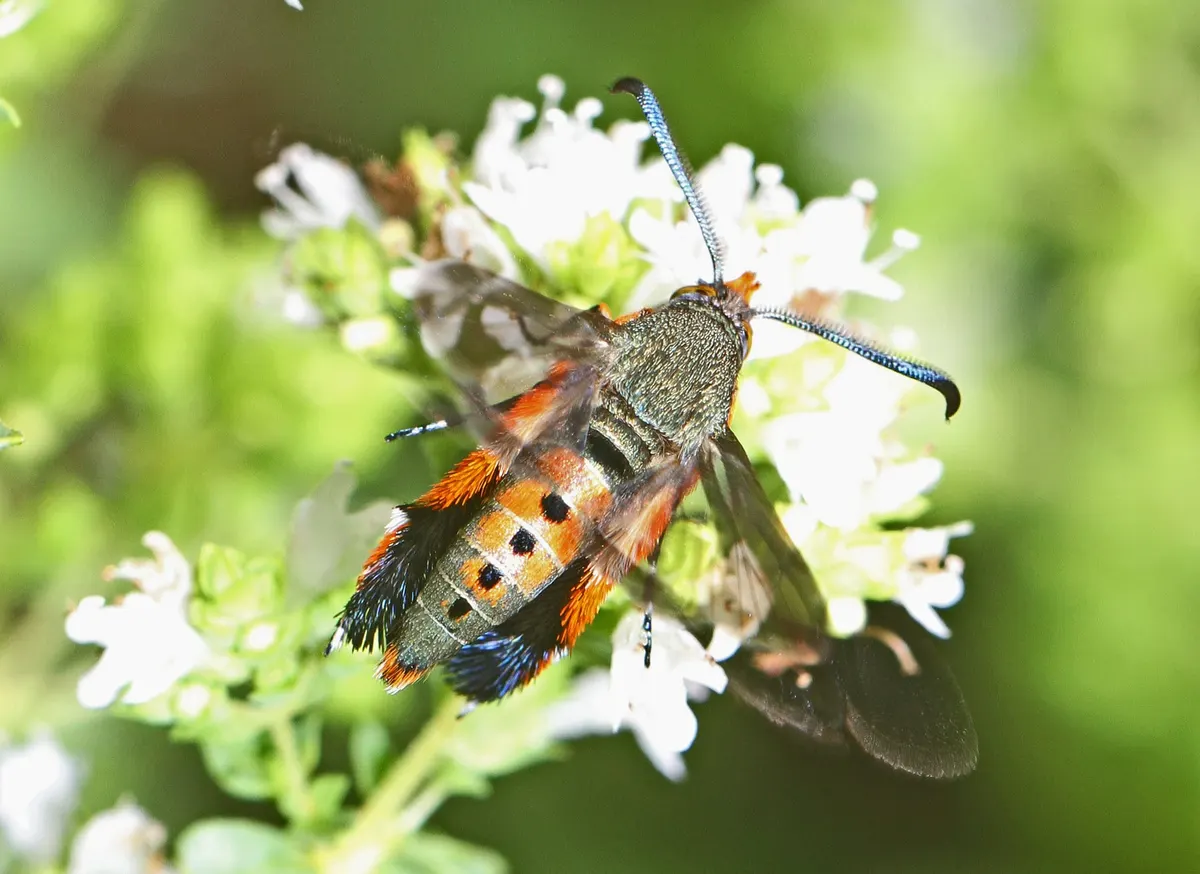
Squash vine borer is the pest behind one of the more discouraging summer garden scenes: a zucchini plant that looked fine yesterday is flat on the ground today, even though the soil is moist. The leaves may perk up at night at first, then wilt again in afternoon heat. A few days later the whole crown collapses.
The important thing to know is that the damage is hidden. The adult is a day-flying clearwing moth that looks more like a wasp than a moth. The larva is the real problem. It hatches near the stem, tunnels inside, and feeds through the water-moving tissue. Once it is deep in the stem, sprays on the leaves do almost nothing. Useful control starts before the larva gets inside, or very soon after the first wilt appears.
This is a pest where timing matters more than intensity. A calm, early inspection beats three panicked products after the vine is already hollow.
Disclosure: Some product links in this article are affiliate links, which means Plant by ZIP may earn a commission if you buy through them at no extra cost to you.
What the gardener is seeing
The classic symptom is sudden wilting on zucchini, yellow straightneck, crookneck, pattypan, pumpkins, or some winter squash. At first, wilting may show only in strong sun. If the plant is still wilted in the morning, treat that as a more serious warning and inspect the crown.
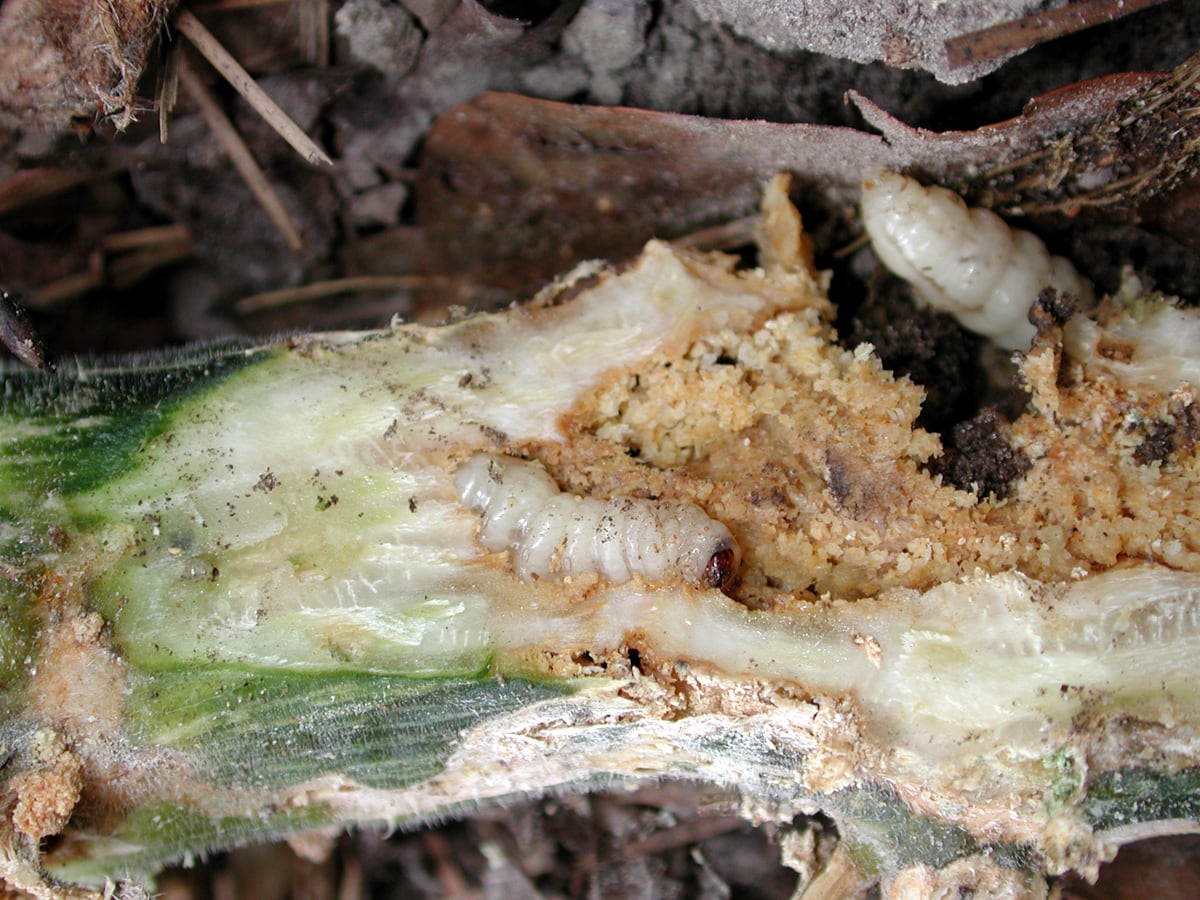
Look low on the plant, especially the main stem near the soil line and the first few inches of vine. Squash vine borer often leaves an entry hole with wet, sawdust-like frass pushed out around it. The frass can look tan, greenish, yellow-orange, or brown depending on the plant tissue and how wet the stem is. The stem may feel soft or split.
Do not diagnose from wilting alone. Bacterial wilt, drought stress, root injury, squash bugs, and stem rot can also make cucurbits collapse. The clue that points toward squash vine borer is frass at the stem plus a hollowed or tunneled interior. If you gently split an infested stem, you may find a cream-colored larva with a brown head.
What usually causes it
Squash vine borer is a native clearwing moth, Melittia cucurbitae. University of Minnesota Extension describes the adult as a black and orange moth that flies during the day and mimics a wasp. Females lay eggs singly near the base of susceptible cucurbits. After the eggs hatch, the young larvae bore into the stem and feed inside for several weeks.
In much of the northern and central United States, extension sources describe one main generation per year, with adult activity commonly beginning in late June or early July. Warmer areas may see earlier activity, and University of Maryland Extension notes that one to two generations can occur depending on region. That regional difference is why local timing matters. Your county extension office or state vegetable pest updates are better than a fixed calendar date.
Hosts are not all equal. Zucchini and many summer squash are frequent targets because they have hollow or tender stems. Pumpkins and some winter squashes can be hit hard too. Butternut types, Tromboncino, cushaw, cucumbers, melons, and watermelons are generally less attractive or less vulnerable. “Less vulnerable” is not the same as immune, but plant choice can lower the fight.
What to do first
Start with a five-minute inspection before reaching for anything.
Check whether the soil is actually moist in the root zone. If the bed is dry several inches down, water stress may be the main issue. If the soil is moist and the plant is still wilting, inspect the stem.
Look for frass at the crown and lower vine. Use your fingers to part leaves and mulch. A 10x hand lens or loupe helps confirm small eggs, entry holes, and fresh frass when the plant base is shaded or crowded. Pay special attention to the side of the stem facing down or into mulch, where damage is easy to miss.
Check nearby plants, not just the collapsed one. Squash vine borer often appears plant by plant, and the first wilted zucchini is your alert to inspect the rest of the row.
If the stem is already mushy, badly hollowed, or collapsed at the crown, the plant may not be worth saving. Pull it, bag it, and remove it from the garden before larvae finish feeding and move into the soil. Composting is a poor choice unless your composting system reliably heats enough to kill pests.
Step-by-step fix for an active borer
If the plant is only partly wilted and you find fresh frass, you can try stem surgery. This is low-tech, but it is one of the few direct options once the larva is inside.
Use a clean, sharp knife or razor. Thin garden gloves can help with grip, but fingertip feel matters more than armor for this job. Make a shallow lengthwise slit along the stem starting at the frass and moving carefully toward the tunneled area. Do not cut across the stem; cut with it.
Open the stem just enough to find the larva. Remove and kill the larva. There may be more than one in the same stem, so inspect the full damaged section.
Mound moist soil over the wounded part of the stem. Keep that area watered. Squash and pumpkins can sometimes root along buried stems, which helps the plant bypass some of the damaged crown tissue.
Reduce stress for a few days. Water at the soil line, avoid heavy pruning, and do not fertilize aggressively in the middle of the rescue. A plant that has lost transport tissue needs steady moisture and time, not a push of nitrogen.
Be honest about the prognosis. If the main crown has been hollowed out for several days, surgery may fail. If only one runner is infested on a larger vining plant, removing the larva and burying the wound has a better chance.
How to prevent the next attack
Prevention is where home gardeners have the most control.
Use row cover before adults lay eggs. Lightweight floating row cover or insect netting can keep adult moths from reaching stems, but the edges must be sealed well. Use low tunnel hoops so the cover does not rub the growing tips, and fasten the edges with garden clips or cover fasteners, boards, soil, or landscape staples. Remove covers when plants flower unless you are hand-pollinating, because bees need access to open cucurbit flowers. Do not use row cover over a bed that had squash vine borer last year unless you rotated, because overwintering pupae may emerge from the soil under the cover.
Watch for adult moths during the flight window. They fly in daylight, often low and fast around squash plants. Yellow bowls or pans filled with water and a drop of dish soap can help monitor adult activity, because the moths are attracted to yellow. This is a monitoring tool, not a complete control plan.
Wrap or protect lower stems where practical. Some gardeners use foil or breathable stem wraps around the lower few inches of young squash stems. This can reduce egg-laying access, but it must be loose enough not to girdle the plant and checked as stems expand.
Succession plant summer squash. In areas with a defined early summer flight, a second planting after peak egg-laying can sometimes produce cleaner late-summer squash. The timing varies by region, so combine this with local pest alerts or observation.
Choose less susceptible crops if borers win every year. Compare Black Beauty zucchini with Waltham Butternut squash and Tromboncino squash before giving the same vulnerable crop the same bed again. Butternut and Tromboncino are especially useful choices where standard zucchini repeatedly collapses.
Clean up at season end. Remove and discard infested vines after harvest. Rotation helps when space allows, because mature larvae leave stems and pupate in the soil near host plants.
What to buy, if anything
For most home gardens, the best purchases are physical and diagnostic, not chemical: row cover or insect netting, a few hoops, clips, landscape staples, boards, or soil to seal edges, and a sharp knife for emergency removal. A hand lens is useful if you are trying to confirm eggs or fresh entry holes. A small yellow pan for monitoring is enough; you do not need a complicated trap setup for a backyard bed.
Insecticides are a narrow-timing tool. University of Minnesota Extension and Wisconsin Horticulture both emphasize that sprays must be on the lower stems when adults are active and larvae are hatching, before larvae bore into the plant. Once the plant is wilting from larvae already inside stems, foliar sprays will not remove the existing borer. Any pesticide use should follow the product label exactly, including crop listing, pollinator precautions, preharvest interval, and reapplication interval.
Be especially careful around flowers. Squash flowers are heavily visited by bees. Broad-spectrum insecticides can kill pollinators, so spraying open blooms or spraying during bee activity is a serious mistake. If local extension guidance and the label support a treatment, apply only to labeled plant parts, avoid open flowers, and time applications when bees are not active.
Do not assume Bt for caterpillars on foliage will solve squash vine borer. Bt products work when susceptible caterpillars eat treated tissue, but the squash vine borer larva is quickly protected inside the stem. Some extension sources discuss injecting Bt or beneficial nematodes into wounds as a rescue tactic, but that is a more specialized approach than ordinary leaf spraying. For most gardeners, early exclusion, scouting, surgery, rotation, and crop choice are more reliable.
When to call extension or escalate
Contact your county extension office if you are losing plants every year, if the symptoms do not match frass and stem tunneling, or if you need pesticide timing for your exact region. Bring clear photos of the whole plant, the crown, the frass, and any larva you find. Note the planting date, crop type, whether the bed had squash last year, and when wilting started.
Also ask for help if cucumbers or melons are wilting without squash vine borer signs. Those crops are usually less common hosts, and bacterial wilt, cucumber beetles, root disease, or water stress may be more likely.
For reference, see University of Minnesota Extension on squash vine borers, University of Maryland Extension on squash vine borer on vegetables, South Dakota State University Extension on biology and management, and Wisconsin Horticulture on identification and management. The broader Plant by ZIP pest management guide explains the same integrated pest management approach for common garden pests, and the planting calendar can help you time succession plantings by ZIP code.
Hero photo: Judy Gallagher / Wikimedia Commons, CC BY 2.0.
Bottom line
If zucchini wilts suddenly in early summer, inspect the crown before watering harder or spraying the leaves. Moist soil plus wilt plus sawdust-like frass near the stem is the squash vine borer pattern. Save what you can by removing larvae early and burying the wounded stem, but put most of your effort into prevention: sealed row cover before flowering, rotation, cleanup, monitoring adult flight, succession planting, and less susceptible squash choices where borers are a yearly problem.