Summer planting is a different game from spring planting. In April, the soil is warming, the air still has mercy in it, and almost every nursery bench looks possible. By July, the garden has become honest. The driveway strip is hotter than the forecast. Containers dry out between breakfast and dinner. Lettuce bolts if you look at it wrong. A plant tag that says “full sun” suddenly feels like a dare.
That does not mean the summer garden is closed. It means you have to add the right plants and install them with a little more respect for heat. The best summer additions are not fragile spring leftovers. They are warm-season vegetables that actually want heat, annual flowers that keep blooming when petunias stall, tough perennials that can handle full sun after establishment, and container plants with enough root room and water to survive patio conditions.
This guide is written for real summer gardeners: people filling a gap after spring crops finished, replacing tired annuals, adding pollinator color, or trying to make a hot bed look alive again before fall. For local timing, check your ZIP in the Plant by ZIP matcher, then compare with the planting calendar for your zone.
Disclosure: Some product links in this article are affiliate links, which means Plant by ZIP may earn a commission if you buy through them at no extra cost to you.
Heat-tolerant does not mean drought-proof
This is the first rule, and it saves money. Heat tolerance means a plant can keep growing, flowering, setting fruit, or holding its foliage when temperatures are high. It does not mean you can plant it into dry soil at 3 p.m. and walk away.
Okra is heat tolerant. Newly transplanted okra still needs water. Coneflower is drought tolerant once established. A coneflower planted from a nursery pot this weekend is not established. Rosemary loves sun and lean soil, but a black plastic pot on a west-facing patio can still cook its root ball.
So before you buy plants, read the site. Is it hot and dry, hot and humid, or hot because of reflected heat from concrete, brick, stone, or siding? Does the bed get six hours of morning sun, or does it get four hours of brutal afternoon sun against a wall? Is the soil sandy and fast-draining, clay and slow-draining, or raised-bed mix that dries out faster than you expected?
The University of Georgia vegetable gardening guide is blunt about the basics: vegetable gardens need strong sun, nearby water, good drainage, mulch, and uniform moisture. That sounds plain because it is. Summer success is usually not a secret plant. It is the right plant plus water, mulch, spacing, and timing.
Set up the bed before you add plants
If you are adding plants in summer, prep matters more than it did in spring. The plant is already under stress before it gets out of the pot.
Water the bed deeply the day before planting. If the soil is dusty, hydrophobic, or pulling away from the edge of a raised bed, fix that before you buy anything. Work a modest amount of finished compost into the top layer if the bed needs organic matter, but do not turn the planting hole into a pocket of pure compost. Roots need to move into the surrounding soil, not sit in a soft little bowl.
Mulch immediately after planting. A 2- to 4-inch layer of straw, leaves, pine straw, or similar organic mulch helps hold moisture, reduce weeds, and keep the surface from baking. Keep mulch a few inches away from crowns and stems. Mulch is for soil, not for burying the plant.
If this bed will carry vegetables, berries, or thirsty annuals through the heat, install water before the plants start sulking. A drip irrigation kit or simple drip line is much more forgiving than hand-watering when the weather turns mean. Pair it with a hose-end timer if you know you will forget a watering day. For the full layout, use the drip irrigation guide.
Shade cloth is not cheating. For new transplants, leafy greens you are trying to nurse through summer, and containers in exposed afternoon sun, a piece of shade cloth can be the difference between recovery and collapse. UF/IFAS notes in its guide to vegetables and herbs under shade that summer production under 30 to 45 percent shade cloth can work for several crops, especially peppers. Use shade cloth as a stress reducer, not as a permanent cave. Most heat-tolerant plants still need bright light.
Plant early in the morning or in the evening. Water the root ball before it goes into the ground. Water again after planting. Then check the soil the next morning, not just the top dust. Summer planting is a short-term care contract.
Vegetables that actually like summer
The easiest summer vegetables are the ones that evolved for heat, or at least tolerate it without drama. This is not the moment for broccoli, spinach, cilantro, peas, or most lettuce. Save those for fall. In summer, lean into okra, sweet potatoes, peppers, eggplant, southern peas, yardlong beans, basil, and selected cucurbits.
Clemson Spineless okra is the classic hot-weather vegetable for a reason. UF/IFAS calls okra “very heat tolerant” and notes that it requires warm soil and temperatures in the Florida Vegetable Gardening Guide. If your spring garden feels tired, okra can make the bed feel productive again. Plant it in full sun, do not overfeed it, and harvest pods young before they get tough.
Red Burgundy okra and Jambalaya okra are good alternatives if you want color or a compact habit. Okra belongs in the back of the bed because it gets tall. Give it space and airflow.
Sweet potatoes are another summer workhorse. Beauregard sweet potato, Georgia Jet sweet potato, and Purple sweet potato are not quick gap-fillers, but they are excellent if you have open ground after spring peas, lettuce, or garlic. They want warm soil, room to run, and consistent moisture while establishing. Once the vines cover the bed, they shade the soil for themselves.
Peppers are worth adding in summer if you can buy healthy transplants. Jalapeno pepper, Serrano pepper, Cayenne pepper, Shishito pepper, and California Wonder bell pepper can all carry a late summer garden, but peppers are not invincible. Mulch is especially helpful, and UF/IFAS notes peppers often produce into summer. In the hottest climates, a little afternoon relief can improve fruit set and reduce sunscald.
Eggplant is similar. Black Beauty eggplant and Ichiban eggplant love warm soil, but drought stress can make fruit bitter. Add a cage, stake, or upright plant support at planting instead of trying to prop up a loaded plant later. Use soft plant ties so stems are supported without being girdled.
Beans are more complicated. Many common snap beans slow down in extreme heat, but Yardlong bean and Red Noodle yardlong bean are built for warmer weather. Give them a trellis or trellis netting before they start climbing. Pinkeye purple hull cowpea is another strong summer crop, especially where summers are long and ordinary beans fade.
Basil belongs in this list because it gives so much back for so little space. Genovese basil is the standard pesto plant, while Thai basil, Cinnamon basil, and Holy basil tulsi handle heat with less complaint than cool-season herbs. Pinch often. If basil starts flowering, harvest harder.
Tomatoes are the risky summer addition. If you already have healthy plants, keep them watered, mulched, and pruned for airflow. If you are planting new tomatoes in summer, choose shorter-season, disease-resistant, or hot-setting types where your climate demands it. Sungold cherry tomato, Celebrity tomato, and Early Girl tomato are more practical choices than a giant heirloom planted late into heat. The UF/IFAS shade-culture guide points out that ordinary tomatoes struggle in summer heat unless they can set fruit at higher temperatures.
Cucumbers and melons can work if you have enough season left and can water steadily. Marketmore 76 cucumber, Armenian cucumber, Suyo Long cucumber, Sugar Baby watermelon, and Crimson Sweet watermelon all need space, pollination, and consistent moisture. Trellis cucumbers where you can. Give melons ground room unless you are ready to sling fruit on a strong support.
Annual flowers for instant summer color
Annual flowers are the easiest way to make a hot summer garden look intentional again. The right ones do not just tolerate heat. They bloom into it.
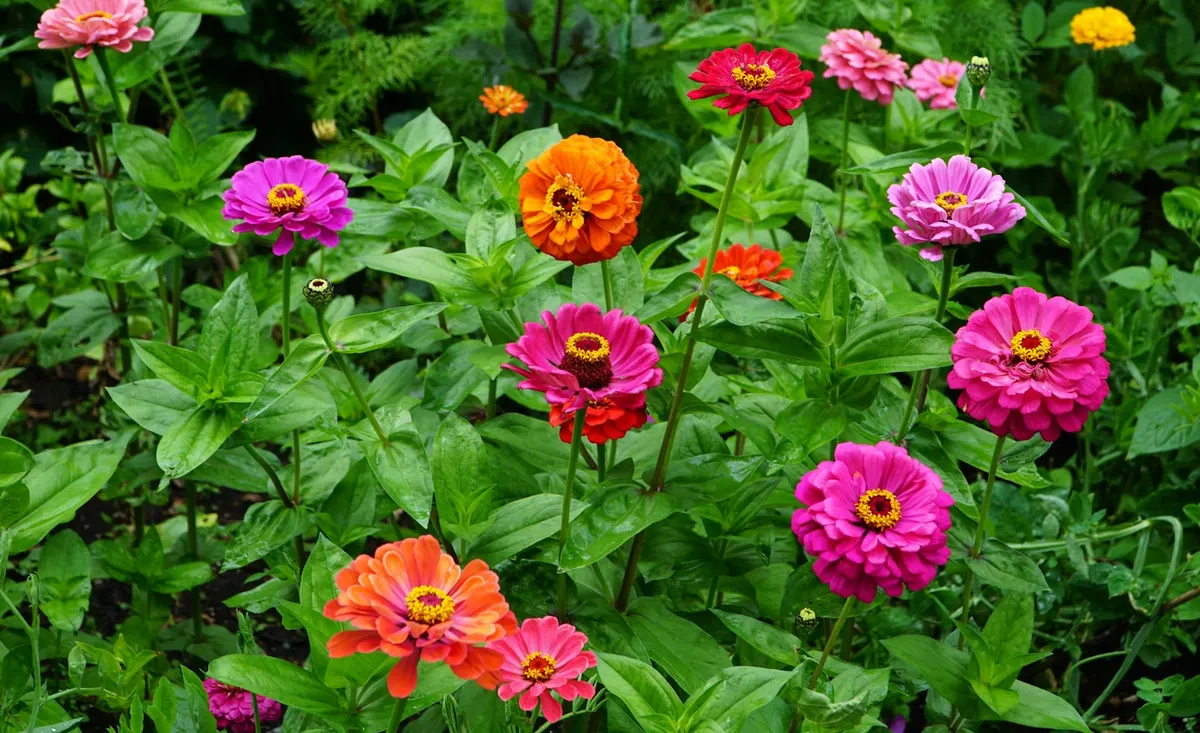
Zinnias are the first pick. Benary’s Giant zinnia gives tall cutting-garden stems. State Fair zinnia mix has old-school color and height. Profusion series zinnia is especially useful for front beds, containers, and humid climates because the Profusion types combine disease resistance with heat and humidity tolerance. North Carolina Extension describes zinnias as colorful, easy to grow, and pollinator-attractive, and its zinnia plant profile notes that the Profusion series is tolerant of heat and humidity.
Direct-sow zinnias into warm soil, or transplant small starts before they are root-bound. Do not crowd them. Good airflow matters in humid summer weather, especially where powdery mildew is common. If you want cut flowers, keep cutting. If you want a lower, cleaner edge, use the Profusion types.
Marigolds are the second simple answer. Durango marigold, French marigold, and Queen Sophia marigold bring quick color, tolerate hot beds, and tuck easily around vegetables. They are not a magic pest shield, but they are useful, cheerful, and tough enough for summer replacement planting.
Cosmos work where soil is not too rich. Sensation cosmos and Bright Lights cosmos can fill a sunny gap fast. Too much fertilizer makes cosmos leafy and floppy. Lean soil, full sun, and room are better than pampering.
For big, hot color, add sunflowers and tithonia. Lemon Queen sunflower and Mammoth sunflower are obvious back-of-border plants. Mexican sunflower is even better for a pollinator-heavy summer bed if you have the space. It wants sun, heat, and room to become a statement.
Annual flowers still need establishment water. Use a hand trowel for quick transplanting, water with a watering wand or can, and label varieties with plant labels if you are comparing which ones actually thrive in your yard. Your future self will not remember which pink zinnia was which.
Perennials for hot full-sun beds
Summer is not the easiest time to plant perennials, but it can be done if you choose tough plants and commit to watering through establishment. If you are planting a large perennial border from scratch, fall is usually kinder. If you are filling a few gaps in a sunny bed, summer can work.
Purple coneflower is one of the safest choices for a sunny pollinator bed. North Carolina Extension notes in its purple coneflower profile that the plant is drought tolerant once established and resistant to heat and humidity. Cultivars like Magnus coneflower, PowWow Wild Berry coneflower, Cheyenne Spirit coneflower, and White Swan coneflower let you choose the look without changing the basic role.
Black-eyed Susan and Goldsturm black-eyed Susan bring the same summer toughness in yellow. They are good for hot, sunny beds that need color from midsummer into fall. Little Goldstar black-eyed Susan is useful where the full-sized plant would sprawl.
Yarrow is for dry, sunny, lean beds. Moonshine yarrow, Paprika yarrow, and Terra Cotta yarrow do not want rich, wet soil. They want drainage, sun, and restraint. If your problem is reflected heat and drought, yarrow is more believable than a thirsty cottage perennial.
Salvia and agastache are also strong summer choices. May Night salvia, Caradonna salvia, Black and Blue salvia, Blue Fortune agastache, and Apricot Sprite agastache all give pollinator value and vertical flower spikes. Cut back spent bloom when appropriate, but do not shear a heat-stressed plant just because it looks untidy.
For lower, dry-edge color, use Blanket flower, Zagreb coreopsis, Moonbeam coreopsis, or Jethro Tull coreopsis. These are better choices for a hot curb strip than plants that want rich, moist soil.
Herbs can do double duty in sunny ornamental beds. Arp rosemary, English thyme, Lemon thyme, Munstead lavender, and Phenomenal lavandin all prefer drainage and sun. The catch is winter survival, especially for lavender and rosemary outside their comfort zones, so check your local zone and drainage before treating them as permanent.
Containers that can survive a hot patio
Containers are harsher than garden beds. Roots are above ground, potting mix heats quickly, and a dark container on concrete can be dramatically hotter than the air temperature. If you want summer containers, size up.
Use a container with real drainage, not a decorative pot with one tiny hole and a prayer. Fill it with container potting mix, not garden soil. Garden soil in a pot compacts, drains poorly, and becomes miserable to water evenly.
For edible containers, choose plants that can actually use the heat: Shishito pepper, Jalapeno pepper, Patio Baby eggplant, Thai basil, Genovese basil, and compact cherry tomatoes if the pot is large enough. A tomato in a tiny pot is not a container garden. It is a crisis with leaves.
For flower containers, zinnias, marigolds, dwarf sunflowers, and heat-tolerant salvias are better bets than cool-season annuals left over from spring. Mix one upright plant, one mounding plant, and one trailing plant if you want the classic container shape, but keep water needs similar. Do not combine rosemary, basil, and a thirsty annual in one small pot and expect all three to be happy.
Containers need feeding because nutrients wash out. Use a balanced garden fertilizer according to label directions, especially for annual vegetables and flowering containers. More is not better in heat. Overfertilized, drought-stressed plants are pest magnets.
If a container wilts every afternoon but recovers overnight, it may simply be experiencing peak heat stress. If it is wilted in the morning, the root ball is too dry, too wet, too hot, or damaged. Morning wilt is the warning sign.
What I would not add in midsummer
Do not add cool-season vegetables unless you are starting a fall crop under controlled conditions. Lettuce, spinach, cilantro, peas, broccoli, cauliflower, cabbage, and many Asian greens are better as late-summer or fall sowings in most climates. If you insist on experimenting, use shade cloth, keep the seedbed evenly moist, and expect uneven results.
Do not plant a large tree or shrub into extreme heat unless you have a real watering plan. A young fig, pomegranate, blueberry, hydrangea, or evergreen can survive summer planting, but it will need careful water through the first season. A good pair of garden gloves, mulch, a slow hose trickle, and patience matter more than fertilizer.
Do not rescue root-bound annuals from a clearance rack unless you are willing to cut, water, and nurse them. Sometimes the bargain plant costs more attention than a fresh transplant.
Do not use shade cloth over plants that are already stretching for light. Shade cloth helps with heat load, but it also reduces light. A pepper in blasting afternoon sun may benefit. A zinnia in four hours of weak light will not.
Do not plant thirsty shade plants in hot full sun because the bed is empty. Hostas, many hydrangeas, impatiens, and tender woodland perennials are not summer gap-fillers for a west-facing bed. That is how a garden becomes expensive sadness.
A simple summer planting plan
If you want vegetables, plant one heat-loving backbone crop and one fast support crop. For example: Clemson Spineless okra in the back, Yardlong bean on a trellis, Thai basil at the edge, and Durango marigold in the gaps. Add drip, mulch, and labels. That is a summer bed with a plan.
If you want pollinator color, plant Purple coneflower, Goldsturm black-eyed Susan, Moonshine yarrow, Blue Fortune agastache, and Profusion series zinnia as the annual filler. Water the perennials deeply while they establish, then let the annuals carry the show this year.
If you want a hot patio container, use a large pot with drainage, fresh potting mix, Shishito pepper or Patio Baby eggplant, basil, and a compact zinnia or marigold. Put it where it gets morning sun and some afternoon relief if your patio radiates heat.
If you want a dry curb strip, skip thirsty bedding plants. Use yarrow, blanket flower, coreopsis, lavender where hardy, and tough annual zinnias for first-year color. Water deeply during establishment, then gradually back off so the plants root down.
Bottom line
The summer garden is not the place for wishful planting. It rewards plants that actually like heat and gardeners who take establishment seriously.
For vegetables, think okra, sweet potatoes, peppers, eggplant, cowpeas, yardlong beans, basil, and carefully managed cucumbers or melons. For flowers, think zinnias, marigolds, cosmos, sunflowers, and tithonia. For perennials, think coneflower, black-eyed Susan, yarrow, salvia, agastache, coreopsis, blanket flower, sedum, and sun-loving herbs with good drainage.
Then do the unglamorous work: water deeply, mulch, use shade cloth where it solves a real problem, give roots room, and do not crowd plants into humid still air. Heat-tolerant plants are not magic. They are just better matched to the season you are actually gardening in.