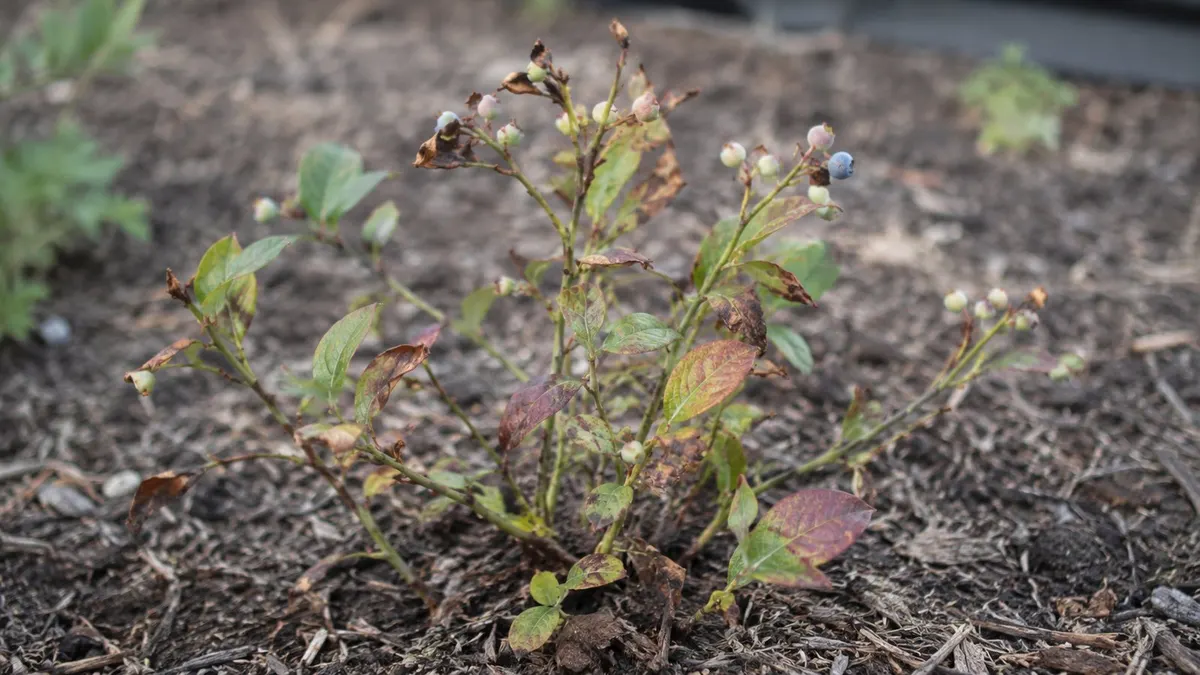
If you’ve ever planted blueberries with high hopes and watched them turn into sad, yellow-leafed shrubs that refuse to produce more than a thimble of fruit, you’ve already met the problem this article is about. The plant isn’t sick. The soil is wrong. Specifically, your soil is too alkaline for what blueberries, and a surprising number of other valuable plants, actually need.
Soil pH is one of the most overlooked variables in home horticulture. People will spend money on fertilizer, premium compost, and clever irrigation while completely ignoring the chemistry that determines whether their plants can absorb any of it. The pH of your soil controls which nutrients are available to plant roots. Get it wrong, and the most expensive fertilizer in the world won’t help.
Disclosure: Some product links in this article are affiliate links, which means Plant by ZIP may earn a commission if you buy through them at no extra cost to you.
Here’s how to know whether you have a pH problem, and what to actually do about it.
What pH means for gardeners
The pH scale runs from 0 to 14. Seven is neutral. Below seven is acidic. Above seven is alkaline (also called basic). Most garden plants are happiest between 6.0 and 7.0, which is slightly acidic to neutral. A small but important group of plants need significantly more acidic conditions, in the 4.5 to 5.5 range. These are the acid lovers, and they’re the reason most people ever need to think about acidifying soil at all.
The pH scale is logarithmic, which matters more than people realize. A soil at pH 7.5 is ten times more alkaline than a soil at pH 6.5, and a hundred times more alkaline than 5.5. So when your soil test comes back at 7.8 and your blueberries want 4.8, you’re not a little off. You’re three orders of magnitude off. That’s why patient, sustained effort is required to move the needle, and why a single sprinkle of “acid fertilizer” does essentially nothing.
Which plants actually need acidic soil
Before you reach for any soil amendment, be honest about whether you have a pH problem at all. Many gardeners assume their soil needs acidifying when it really doesn’t.
The genuine acid lovers, plants that need a pH of roughly 4.5 to 5.5, include blueberries, azaleas, rhododendrons, camellias, mountain laurel, gardenias, pieris, leucothoe, and most heathers. Among edibles, blueberries are the standout, but lingonberries, cranberries, and huckleberries belong to the same camp. Cane fruits like blackberries and raspberries prefer slightly acidic soil but tolerate a wider range. Hollies and conifers generally prefer acidic soil but aren’t as demanding as the heath family.
The plants that benefit from mildly acidic soil but don’t strictly require it, around pH 6.0 to 6.5, include hydrangeas (which famously change color based on pH), magnolias, dogwoods, most ferns, hostas, and many vegetables including potatoes, sweet potatoes, peppers, and tomatoes. These plants will tolerate near-neutral soil but perform better when slightly acidic.
Everything else, meaning the vast majority of perennials, shrubs, lawns, and vegetables, is happy in the 6.5 to 7.0 range and doesn’t need any pH adjustment unless your soil is genuinely off.
If you don’t have plants in the first two categories, you probably don’t need to acidify anything. Save your money and your effort.
Test before you treat
This rule matters. Do not start amending your soil based on a hunch or based on what your neighbor did. Soil pH varies dramatically over short distances. Readings often differ by a full point between the front yard and the back of the same property. Without a real test, you’re guessing.
You have two reasonable options. The first is a cheap mail-in test from your county extension office, which typically runs ten to twenty dollars and gives you pH plus major nutrients with regional context. This is the right choice for anyone serious about getting it right. The second is an at-home test kit, which is faster and good enough for ballpark work.
Luster Leaf Rapitest soil test kit is the standard at-home option and tests pH plus N-P-K for around fifteen dollars. For more precise readings, a digital soil pH meter gives you instant numbers without chemistry, though calibration matters and the cheap ones drift. For the most accurate at-home work, a MySoil mail-in test kit sends you a prepaid mailer and returns a detailed report in about a week.
Take samples from several spots in the area you intend to plant, mix them, and test the mixture. One reading from one spot is unreliable. Three readings averaged is a real number.
Test at the same time of year you plan to amend, because pH fluctuates seasonally. And retest annually for any area where you’re actively trying to change the pH. You can’t manage what you don’t measure.
How to acidify, in order of preference
Once you’ve confirmed your soil is too alkaline for what you want to grow, there are several real options. They work at different speeds and at different scales. Pick based on how much time you have and how much soil you’re trying to treat.
Elemental sulfur, the best tool for lasting change
If you’re serious about lowering pH, elemental sulfur is the right tool. Soil bacteria slowly oxidize sulfur into sulfuric acid, which is what actually drops the pH. The process is biological, which means it’s temperature dependent and slow. Typically three to six months for full effect, sometimes longer in cool climates. But it’s also durable. A proper sulfur application changes your soil chemistry for a year or more.
The general rule of thumb is that to lower pH by one full point in loamy soil, you need roughly one pound of elemental sulfur per 100 square feet. Sandy soils need less, around three quarters of a pound. Clay soils, which resist pH changes stubbornly, need more, closer to a pound and a half. These are rough numbers. The exact rate depends on your starting pH, soil texture, and the form of sulfur. Read the bag, or check your extension service’s local guidance.
Espoma Soil Acidifier is the most widely available consumer option and works well for most home gardeners. It comes in convenient bags, dust is minimal, and the granule size dissolves predictably. For larger applications, bulk elemental sulfur is significantly cheaper per pound but harder to handle.
Work the sulfur into the top six to eight inches of soil if you can. Surface application works but is much slower. Water it in. Then wait. Test again in three to four months and reapply if needed. Do not exceed the recommended rate trying to speed things up. You’ll burn roots and harm beneficial soil biology.
Aluminum sulfate, fast but limited
Aluminum sulfate works almost immediately because it doesn’t depend on bacterial action. It reacts chemically with soil moisture to release acidity within days. This makes it tempting for impatient gardeners and useful for the specific job of turning hydrangeas blue.
It generally isn’t the right choice for broader acidification work. Aluminum is toxic to many plants at high concentrations, and repeated aluminum sulfate applications can build up to harmful levels over time. Blueberries in particular are sensitive to aluminum and can suffer even when they’re getting the lower pH they wanted.
Aluminum sulfate for hydrangeas is fine for ornamentals where you want fast color change. For anything edible, especially blueberries, stick with elemental sulfur.
Iron sulfate, middle ground
Iron sulfate (sometimes sold as ferrous sulfate or “iron tonic”) works faster than elemental sulfur but slower than aluminum sulfate, and it has the side benefit of supplying iron, which alkaline soils often lock up. It’s a reasonable choice for situations where you want measurable change in weeks rather than months but don’t want the aluminum issue.
It does take significantly more iron sulfate than elemental sulfur to achieve the same pH drop, roughly five to six times as much by weight. So it’s better for spot treatments and smaller beds than for whole gardens. Iron sulfate granules are the typical home garden product.
Organic matter, slow maintenance that helps
Adding acidic organic matter doesn’t dramatically lower pH on its own, but it consistently nudges soil in the right direction over years and improves everything else about your soil at the same time. Compost made from oak leaves, pine needles, peat moss, or coffee grounds skews acidic. Aged pine bark mulch is particularly useful for acid loving plants because it gradually feeds the soil acidity as it breaks down.
For anyone establishing a permanent blueberry bed, plan on a multi year approach. Amend with sulfur to get into range, then maintain with acidic mulch year after year. The combination is far more durable than either alone.
Pine bark fines are the best acidic mulch around for blueberries. Peat moss is widely available and effective when worked into planting holes, though there are real ecological concerns about peat harvesting worth considering. Coconut coir is a sustainable alternative with a near neutral pH that improves soil texture without the acid contribution.
Coffee grounds, useful but oversold
Coffee grounds get talked about constantly as a soil acidifier. The reality is more nuanced. Fresh, unbrewed coffee grounds are mildly acidic, but used grounds (the ones from your morning pot) are close to neutral after brewing extracts most of the acidity. They’re great soil conditioners and add organic matter and a little nitrogen, but they won’t meaningfully lower the pH of an alkaline soil. Use them, but don’t count on them.
Acid fertilizers, for maintenance, not correction
Fertilizers formulated for acid loving plants, typically containing ammonium sulfate, provide a mild, sustained acidifying effect along with nutrients. They’re useful for maintaining acidic conditions you’ve already established, not for correcting a soil that’s significantly off.
Espoma Holly-tone is the standard acid loving plant fertilizer, formulated for hollies, blueberries, azaleas, rhododendrons, and similar plants. Apply twice a year, in early spring and again in fall, once your pH is in range.
What to avoid
A few things people try that you should skip.
Vinegar. It’s acidic, but the effect is so short lived as to be functionally useless. Within a day or two the soil pH rebounds and you’ve accomplished nothing except killing some beneficial microbes. Save the vinegar for salad dressing.
Lemon juice or other citrus. Same problem as vinegar. Don’t waste your money.
Sphagnum peat moss as a sole solution. It helps, especially when worked into planting holes for acid lovers. But it’s not a substitute for sulfur if your soil is genuinely alkaline. Use it alongside real amendments, not instead of them.
Sulfur dust on the surface with no incorporation. It will work eventually, but you’re losing 60 to 70 percent of the effect compared to working it in. If you can’t dig (because the bed is already planted), at least scratch it into the top inch or two.
Overdoing it. Sulfur is forgiving but not infinite. Doubling the recommended rate doesn’t double the speed of pH change. It just burns roots and creates problems. Patience matters more than aggression.
A realistic timeline
If you’re starting from a typical alkaline garden soil at around pH 7.5 and you want to grow blueberries that need pH 4.8 to 5.5, here’s what a sensible project looks like.
Year one. Test soil in early spring. Apply elemental sulfur at the recommended rate for a one point drop, worked into the top six inches of the planting area. Water in. Wait three months. Retest. Apply a second round if needed. Mulch heavily with pine bark fines. Plant blueberries in the fall once pH is approaching range.
Year two. Retest in spring. Apply maintenance sulfur if needed, plus an acid fertilizer like Holly-tone. Refresh pine bark mulch. Plants will be establishing root systems. Don’t expect heavy fruit yet.
Year three onward. Annual maintenance. Test every spring. Top up sulfur every year or two as needed. Mulch annually. Expect serious fruit production by year three and a productive planting that lasts decades.
This is the patient, durable approach. The shortcut approaches, things like heavy aluminum sulfate, container growing in pure peat, or raised beds filled with acid mix, all have their place, but they trade durability for speed.
When to give up on amending and use containers instead
One practical limit. If your native soil is heavily alkaline, say pH 8.0 or higher, common in much of the West and parts of the Plains, and especially if you have alkaline groundwater that will keep raising the pH no matter what you do, you may be better off growing your acid lovers in containers or raised beds filled with a custom acidic mix. The amount of sulfur required to drag genuinely alkaline soil down to 4.8 and keep it there is enormous, and the work is endless.
A 20 gallon container filled with two parts pine bark fines, one part peat moss, and one part compost gives a blueberry exactly the conditions it wants. Water it with rainwater or acidified water, and you’ll get better fruit with a fraction of the effort. Large fabric grow bags or half whiskey barrel planters both work well for blueberries and similar shrubs.
Sometimes the right answer isn’t fighting your soil. It’s working around it.
Plan acid-loving plants in Plant by ZIP
If blueberries are the reason you are testing pH, compare a few profiles before you buy plants. Legacy blueberry, Duke blueberry, and Brightwell rabbiteye blueberry have different regional strengths, and the best choice depends on hardiness, heat, soil, and available space. Use the plant screener to compare blueberries with figs, blackberries, currants, and other edible shrubs. If your native soil is too alkaline to fight, use its container and soil filters to find plants that fit a managed potting mix.
Bottom line
Soil pH is real chemistry, not a gardening superstition, and the plants that need acidic soil really do need it. But the work of acidifying soil isn’t complicated. It’s just patient. Test before you treat. Use elemental sulfur for serious work. Use acidic organic matter to maintain. Don’t waste time on vinegar or coffee grounds. Plan in years, not weeks. And when your soil is genuinely fighting you, build a container or a bed where you can control the chemistry from scratch.
Do this right once, and you’ll have decades of blueberries to show for it.